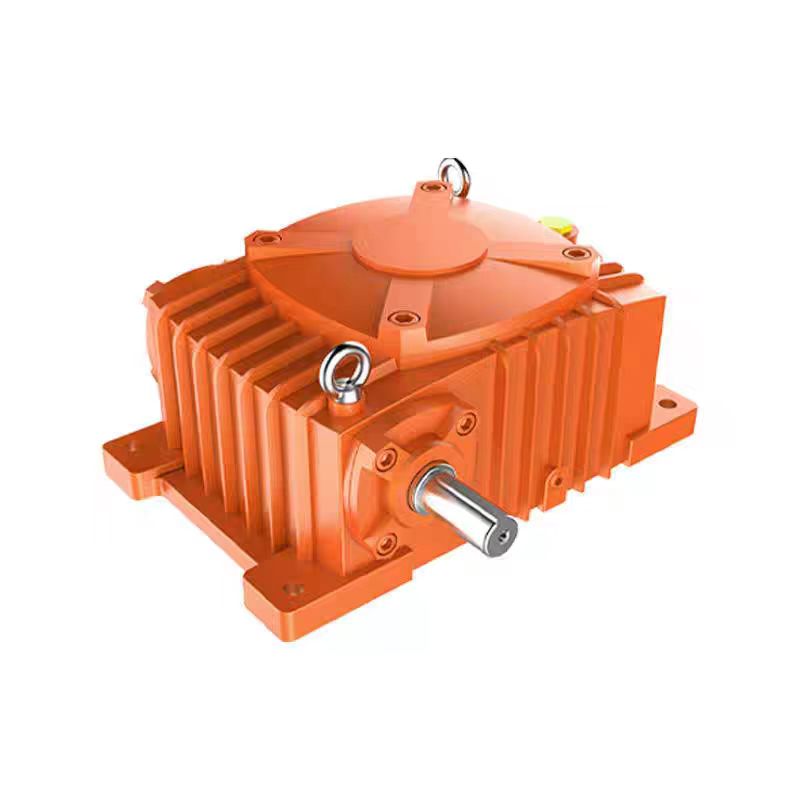
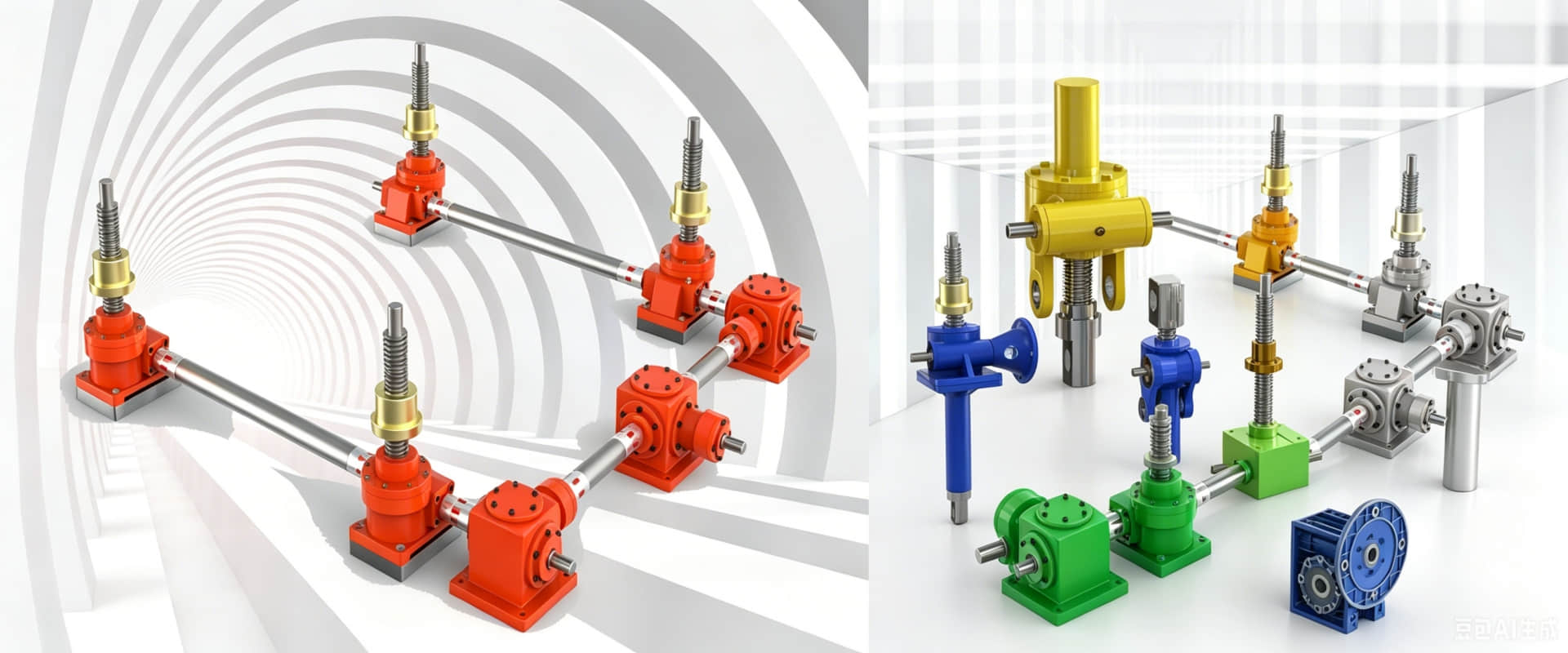
worm gear self-locking principle and applications
Worm Gear Self-Locking Principle and Application: Essential Engineering Truths to Understand
Before Selection
The "self-locking" property of worm gear reducers is the fundamental guarantee for the safety
design of many machines.
However, self-locking is not magic; it has strict physical conditions, and misuse
can lead to serious accidents.
The following explains the core points in the shortest possible time,
from principle to application.
I. The Physical Essence of Self-Locking
Self-locking is achieved by the friction angle being greater than the lead angle.
The worm helix has a lead angle γ, and there is a friction coefficient
μ between the worm gear teeth,
with a corresponding friction angle φ = arctan(μ).
Self-locking condition: γ < φ. That is, when the helix angle is less than the friction angle,
no matter how much
torque is applied to the worm gear side, it cannot drive the worm to rotate,
and the mechanism is "locked."
This characteristic naturally provides a reverse braking function, eliminating
the need for an external brake.
II. Key Influencing Factors
- **Lead Angle**: Single-start worm gears typically have a lead angle of 3°–6°,
resulting in strong self-locking;
multi-start worm gears have a large lead angle, weakening or even
eliminating self-locking.
- **Coefficient of Friction**: Better lubrication results in a lower μ, which conversely
reduces self-locking capability.
**Static self-locking is reliable, dynamic self-locking is unreliable.**
- **Vibration Environment**: Impact or vibration can instantly break static friction,
causing temporary self-locking failure and a slow load reduction.
- **Wear**: Over time, tooth surface wear will cause relative changes in the lead angle,
potentially eliminating the original self-locking margin.
**Engineering Warning**: In lifting or suspension systems involving personal safety,
worm gear self-locking must never be relied upon as the sole braking method.
An independent mechanical brake must be installed. **
**III. Typical Application Scenarios**
| Scenarios | Features | Case Studies |
|------|----------|------|
| Lifting and Hoisting | Anti-Reverse, Load Holding | Manual Hoists, Small Winches, Stage Cranes |
| Inclined Conveying | Stop Locking | Inclined Belt Conveyors, Screw Feeders |
| Precision Adjustment | Position Self-Holding | Valve Actuators, Manual Indexing Tables |
| Gantry Crane Systems | Wind-Powered or Gravity-Driven Self-Locking
| Industrial Lifting Doors, Gate Openers and Closers |
**IV. Selection and Usage Guidelines**
1. **Single-head worm gear is preferred**, with a lead angle ≤4° for optimal static self-locking.
2. **Lubrication Requirements Must Be Specifyed**: Factory self-locking is based on
grease or high-viscosity oil;
do not arbitrarily change to thinner oil on-site.
3. **Dynamic Braking Cannot Rely Solely on Self-Locking**: High-frequency start/stop or emergency
stop requires an electromagnetic brake.
4. **Vertical Load:** Unless equipped with an independent ratchet or brake, worm gear
self-locking suspension is not permitted.
**We offer a full range of self-locking worm gear reducers with integrated braking solutions.
** Inform our engineers of your load, installation angle, and safety level, and we will calculate
the self-locking margin to ensure optimal performance.
**Contact our technical team now for self-locking worm gear reducer selection
and customization solutions.**
If you would like to learn more about worm gear reducer, please contact Huxing Company.