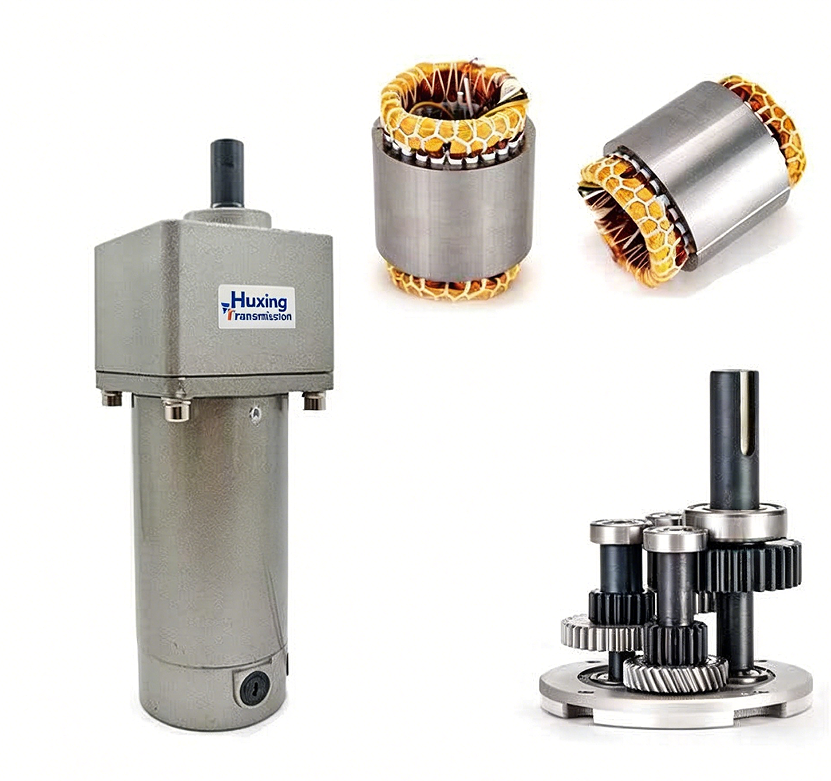
brushless DC motor vs brushed DC motor
Brushless DC Motors vs. Brushed DC Motors: The Core Trade-offs of Efficiency, Lifespan, and Cost
In the field of DC drives, the choice between brushed and brushless motors directly impacts equipment
maintenance cycles, energy efficiency, and controllability. While both use direct current, their internal
structures and performance curves are drastically different. Below is a professional comparison
from five dimensions most important to engineers.
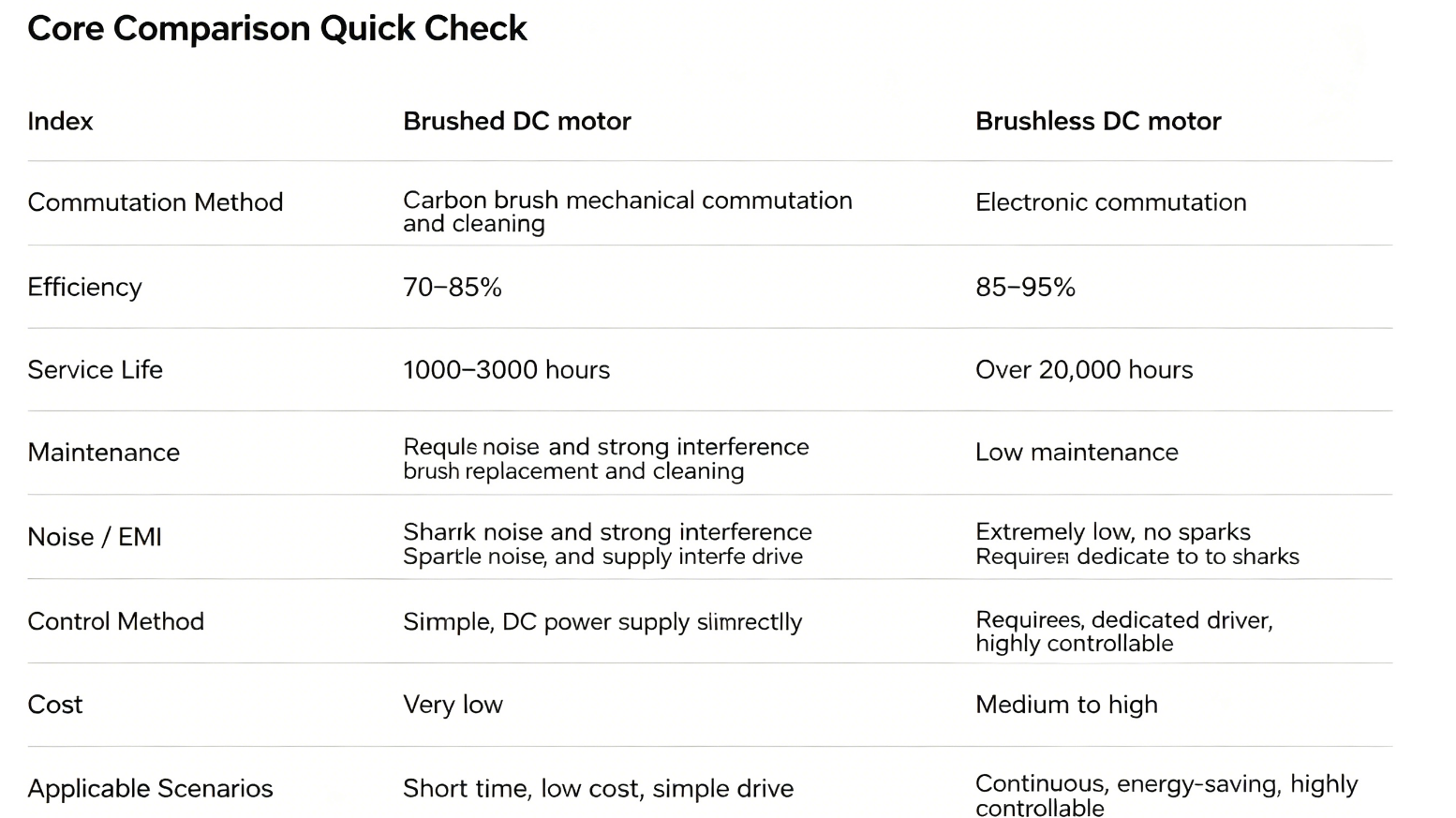
I. Commutation Method
This is the fundamental difference. Brushed motors use mechanical contact between carbon
brushes and the commutator for commutation. Current flows through the carbon brushes into
the rotor coils, generating a rotating magnetic field. Brushless motors eliminate carbon brushes,
using an electronic commutator (driver) to control the stator coils, with the permanent magnet rotor
following the rotating magnetic field. Brushless motors eliminate mechanical friction and sparks,
representing a revolutionary evolution.
II. Efficiency and Heat Generation
Brushed motors experience significant energy loss due to sliding friction between the carbon brushes
and the commutator, especially at high speeds, with efficiency typically only 70–85%. Brushless motors
have no frictional losses, achieving efficiencies of 85–95%, and heat is concentrated in the outer stator,
making heat dissipation easier. At the same power output, brushless motors are more energy-efficient,
have lower temperature rise, and are more suitable for continuous high-load operation.
III. Lifespan and Maintenance: Brushed motors experience continuous wear and tear, with a typical
lifespan of 1000–3000 hours. Regular replacement of the carbon brushes and cleaning of the carbon
powder are necessary; otherwise, the commutator may burn out. Brushless motors, with only the
bearings being wear parts, can have a lifespan of tens of thousands of hours and are essentially
maintenance-free. For unattended equipment, clean rooms, or installation spaces, brushless
motors offer significant advantages.
IV. Speed-Torque Characteristics: Brushed motors have high idle speeds, but the speed drops
significantly under load, exhibiting high torque at low speeds. Brushless motors, equipped with sensors,
can precisely control speed and torque, and offer excellent high-speed performance, maintaining
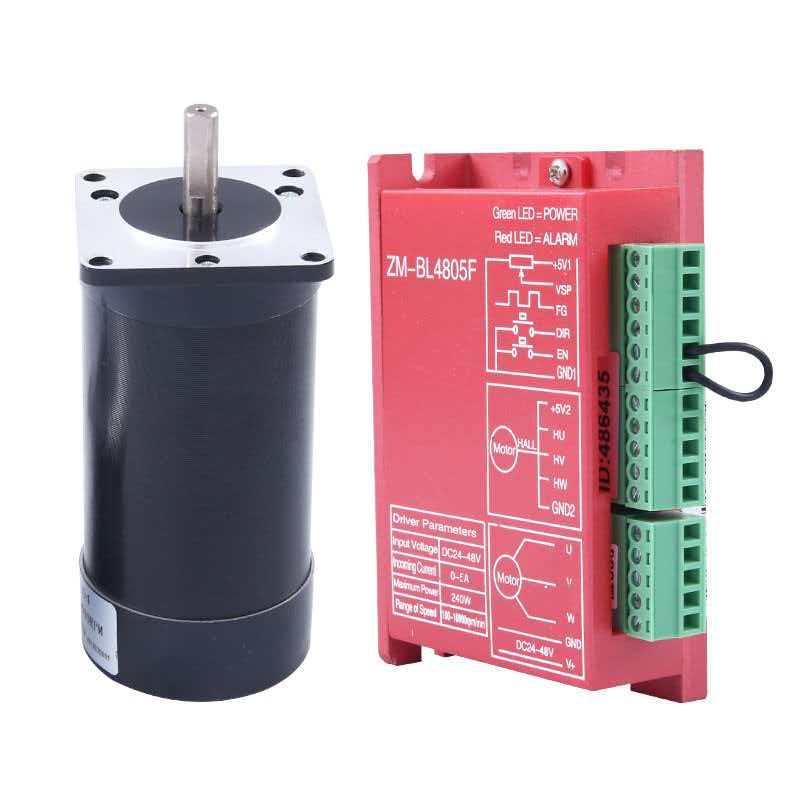
constant torque for extended periods. However, brushless motors require a driver and cannot
be directly connected to a DC power supply.
V. Cost and Drive Complexity: Brushed motors have a simple structure, require only a DC power supply
and speed regulation can be achieved using a rheostat or simple voltage regulator, resulting in extremely low cost.
Brushless motors require a dedicated electronic speed controller (ESC), which costs several times more,
but the savings in electricity and maintenance-free labor hours often recover the price difference over the entire lifespan.
brushless DC motor
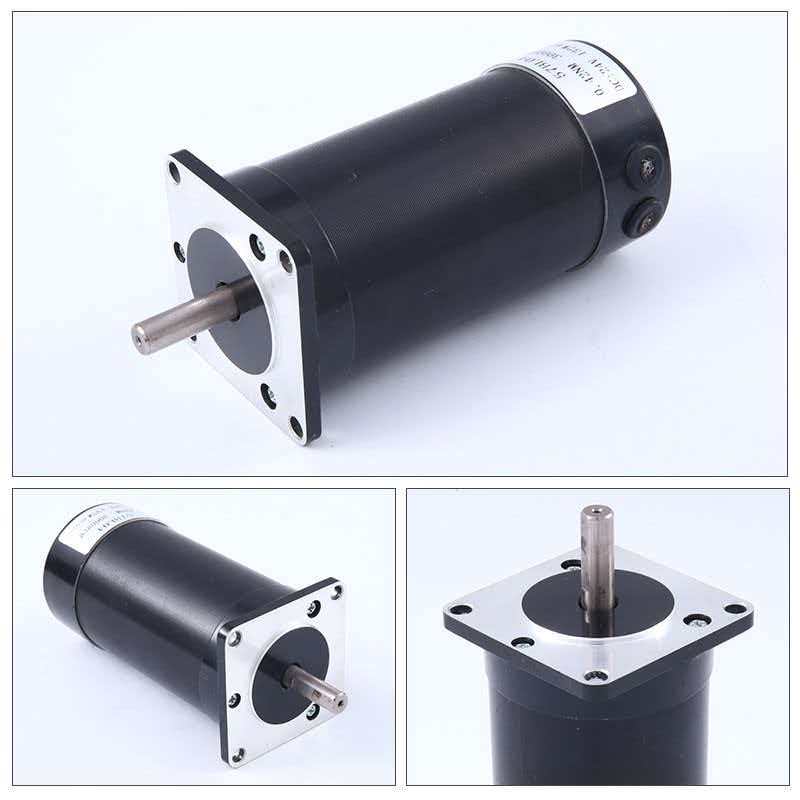
brushed DC motor