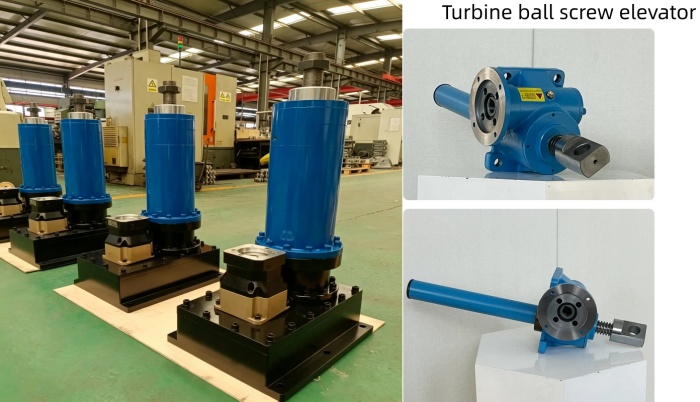
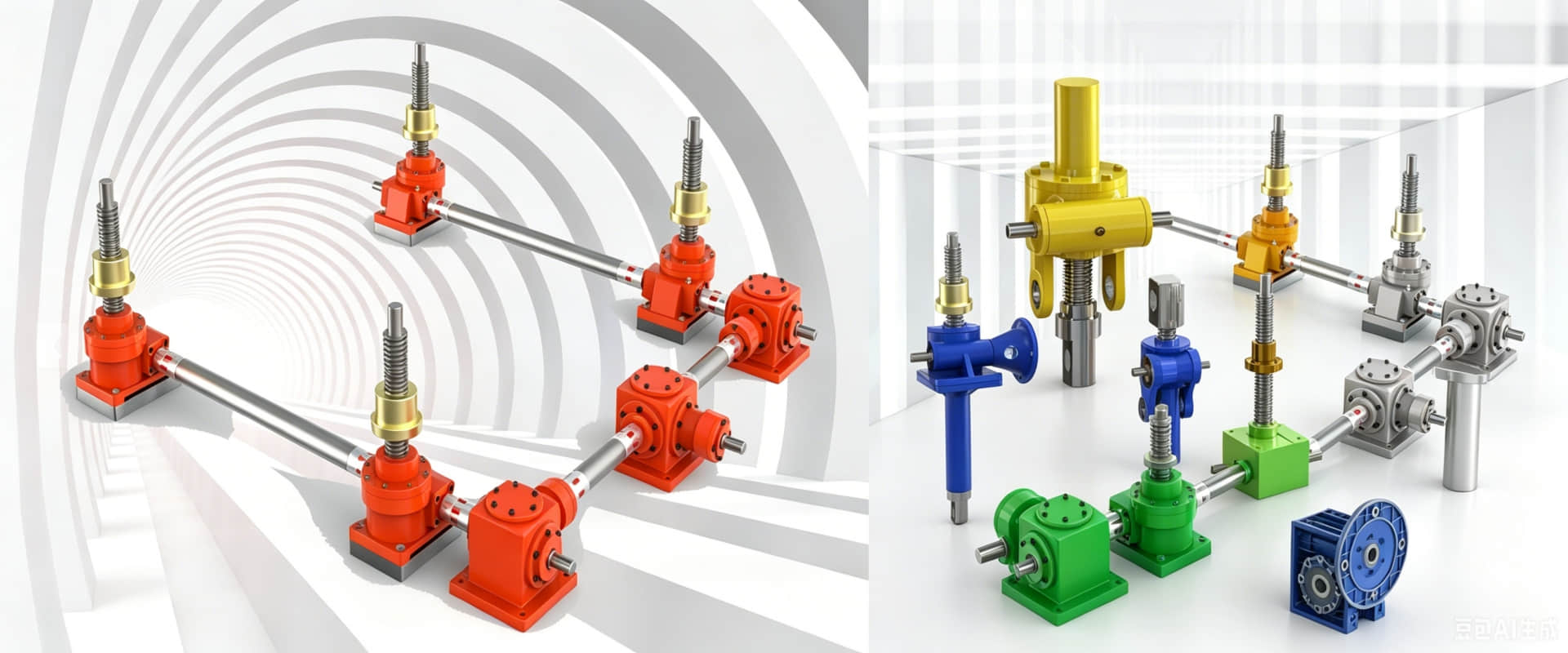
Working principle of 380V screw jack lifting reducer
The electric push rod is mainly composed of five parts: motor, reduction gear set, screw nut, housing, and control module. The three-phase asynchronous motor is driven by a voltage of 380V, and the high-speed of the motor is converted into low torque rotational motion through a reduction gear set. The rotational motion is then converted into linear motion through a screw nut mechanism.
Analysis of Key Technical Parameters for Electric Push Rod Elevators
1. Thrust and speed: The 380V electric push rod typically has a thrust range of 500N-10000N and a speed
of 0.5-5mm/s. Different models can be selected according to load requirements. Small electric door and
window openers commonly use 500N thrust models, while large industrial lifting platforms require a
thrust of over 5000N.
2. Protection level: IP54 or above protection level can adapt to dust and humid environments. If used in
chemical workshops, IP65 waterproof and dustproof models should be selected.
3. Control mode: Supports multiple control modes such as jog, remote control, PLC linkage, etc. Some
high-end models also have position feedback function to achieve closed-loop control.
Selection precautions:
1. Load matching: It is necessary to calculate a safety factor of 1.5 times the actual working load to avoid
motor burnout caused by overload.
2. Schedule design: Reserve a 10% margin according to the equipment schedule requirements to prevent
insufficient installation space from affecting usage.
3. Environmental adaptation: High temperature environments require the selection of high-temperature
resistant motors (such as F-class insulation), and it is recommended to use stainless steel shell models in
coastal areas.