
Electric vs Manual Screw Jack: Key Differences & Selection Guide
Electric Screw Jack vs Manual Screw Jack – Key Differences & How to Choose
Electric Screw Jack vs Manual Screw Jack – Key Differences & How to Choose
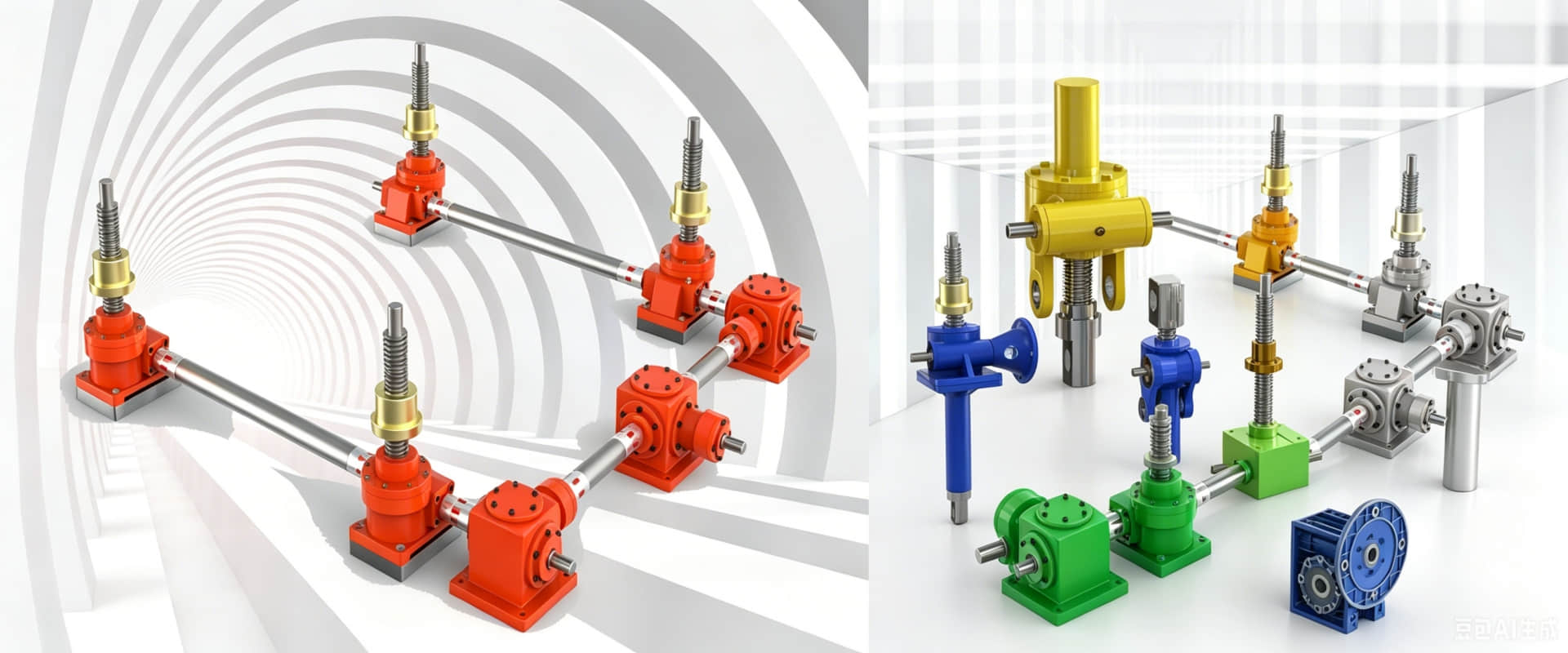
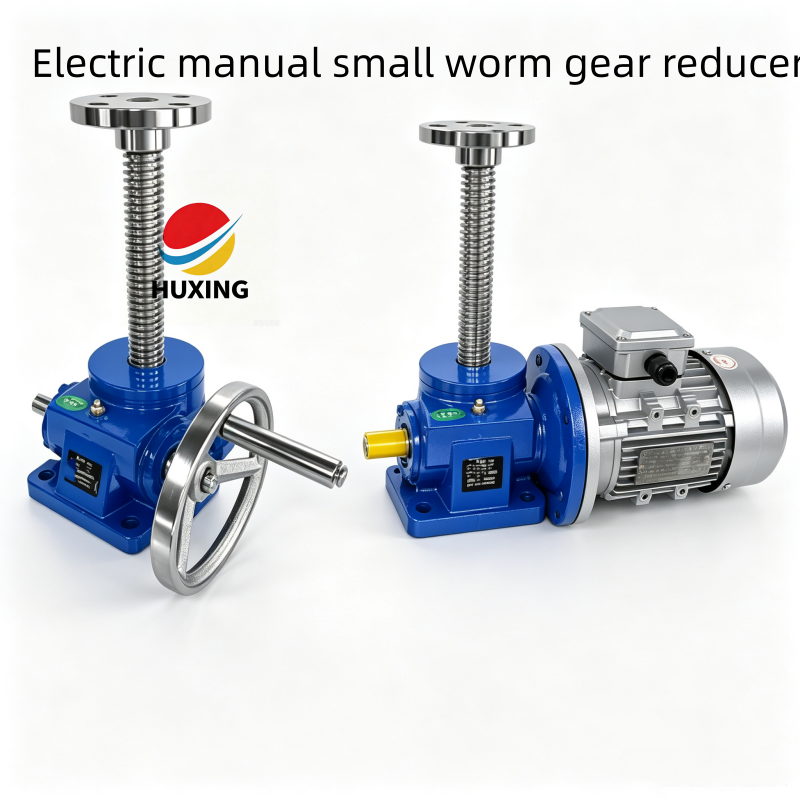
Both electric and manual screw jacks use the same worm gear mechanism – a rotating worm drives a bronze worm wheel, which converts rotary motion into linear lifting or lowering. The difference is how power is delivered.
Quick Comparison
| Feature | Manual Screw Jack | Electric Screw Jack |
| Power Source | Handwheel or hand crank | Electric motor (AC/DC/servo) |
| Speed | Slow (hand-cranked) | Fast (motor-driven) |
| Precision | Limited by operator | High, with feedback control |
| Automation | None | Fully automatable |
| Self-locking | Yes (worm gear design) | Yes (worm gear design) |
| Power Required | None | Electricity required |
| Maintenance | Minimal | Moderate (motor, controls) |
| Initial Cost | Lower | Higher |
When to Choose Manual
Choose manual screw jacks when your application involves:
Infrequent adjustments – static positioning, occasional maintenance
Light loads – low-duty operations
No power access – remote sites, field work, emergency use
Simple precision – rough positioning only
Budget constraints – lower initial investment
When to Choose Electric
Choose electric screw jacks when your application involves:
High-frequency operation – repeated lifting cycles
Heavy loads – motor provides consistent power
Precise positioning – ±0.1mm accuracy with feedback
Automation integration – PLC control, production lines
Multi-jack synchronization – 2, 4, 8 or more jacks moving together
Electric jacks dominate automated production lines, conveyor systems, stage equipment, automotive assembly, and material handling systems
Need Help Selecting?
Send us your load, frequency, stroke, and power availability – our engineering team will recommend the right drive.