
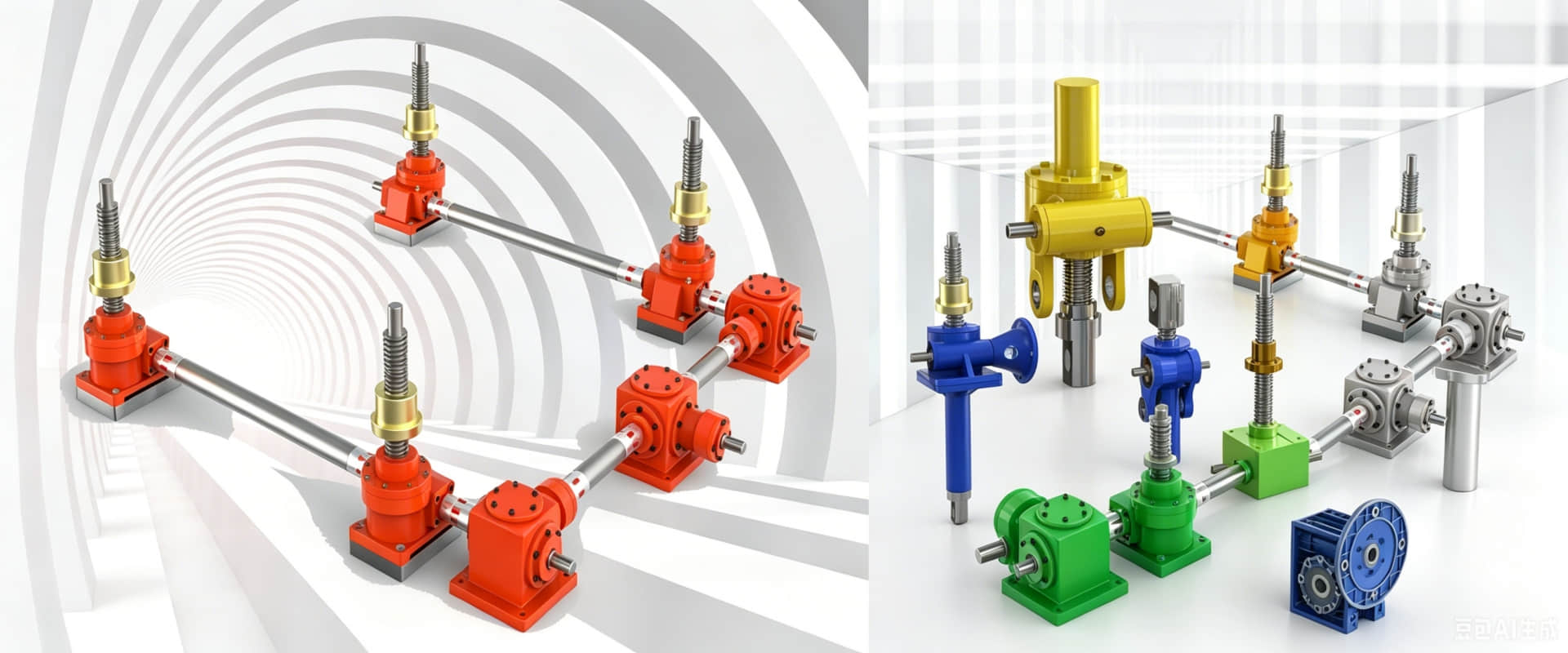
servo motor gearbox matching principles
Servo Motor and Gearbox Matching Principles: Inertia, Torque, and Precision are All Indispensable
Matching a servo motor with a gearbox is not simply a matter of "flanges aligning and screws tightening.
" Improper matching can lead to minor issues like vibration and squeaking, inaccurate positioning,
or even frequent alarms and mechanical overload damage. The following five core principles are
crucial indicators that engineers must verify one by one during the selection process.
Generally, the most common and classic configuration for servo motors is a precision planetary gearbox,
followed by precision worm gear reducers and servo gear reducers.
I. Inertia Ratio—The Foundation of Stability
Servo systems are extremely sensitive to inertia. The ratio of the load inertia
(converted to the motor shaft)
to the motor rotor inertia directly determines the system's controllability.
II. Torque Matching – Sufficient Power is the Bottom Line
Servo motors have instantaneous overload capacity (typically 300%), but cannot
withstand prolonged overload.
After matching the reducer, three torque values need to be checked:
Continuous Torque: The root mean square torque of the load
must be ≤ the motor's rated torque
(considering the reduction ratio and efficiency).
Acceleration Torque: The peak torque required during acceleration ≤
the motor's maximum torque × safety factor (0.8).
Reducer Rated Torque: The allowable torque at the reducer's output
must be ≥ the actual maximum impact torque of the load,
multiplied by a service factor.
III. Speed Matching – Speed Loop Failure Prevention
A servo motor operates in a constant torque region below its rated speed and
enters a constant power region above its rated speed,
where torque begins to decrease. The reduction ratio must be selected to
meet the output speed requirements while allowing
the motor to operate below its rated speed for extended periods.
Maximum output speed = Motor rated speed / i, typically with a 10% margin.
Beware of low-speed creep: If the motor operates below 100 rpm for extended periods,
verify the servo motor's low-speed stability,
or appropriately reduce the reduction ratio; direct drive may be necessary.
IV. Accuracy and Backlash Matching – The Source of Positioning Error
The backlash (backlash) of the reducer directly affects positional accuracy.
The tolerance for backlash varies greatly depending on the application:
Precision trajectory machining, robot joints: Backlash ≤ 1 arcminute is required;
planetary or harmonic reducers are suitable.
General positioning and indexing: 3-5 arcminutes are feasible.
Pure speed control: 10 arcminutes or more are acceptable.
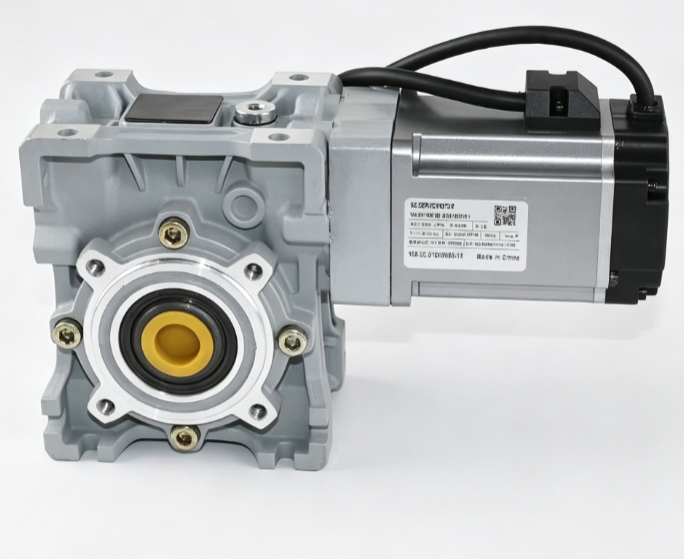
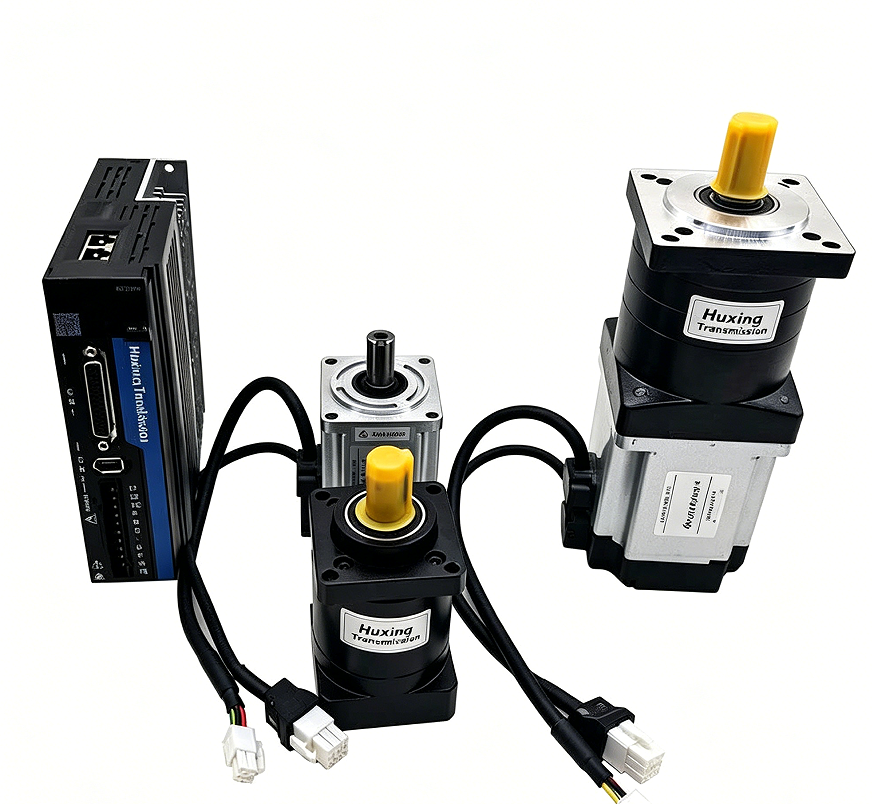
Note: While helical gear reducers with servo motors are economical, their large backlash leads to accumulated errors
with frequent forward and reverse rotations; planetary reducers are essential in these cases.
V. Rigidity and Installation Matching – Mechanical Details That Cannot Be Ignored
Flange and Shaft Diameter: Must be aligned; radial deviation will directly transmit to the reducer input bearing,
causing premature wear and vibration.
Coupling: A zero-backlash flexible coupling is recommended between the servo motor shaft and the reducer input
hole to absorb minor eccentricities.
Jack Rigidity: Deformation of the mounting base can cause uneven loading of the reducer's internal gear meshing;
planetary reducers are particularly sensitive to this.
Quick Selection Guide:
Initially determine the reduction ratio based on load inertia and response requirements.
Check the calculated inertia ratio; increase it if necessary.
Calculate the continuous torque and acceleration torque on the motor side, and select the motor power.
Check the output speed to ensure it is within the constant torque range.
Select the reducer backlash rating and rated torque (including service factor).
Confirm the installation interface to complete the selection.
Making Matching Simple:
Send us your load parameters, motion curves, and accuracy requirements. Our engineers will
provide a one-stop report including inertia ratio calculation, torque curve graph, and reducer
model information. From servo planetary reducers to high-rigidity helical gear reducers,
we offer both in-stock and custom-made options.