
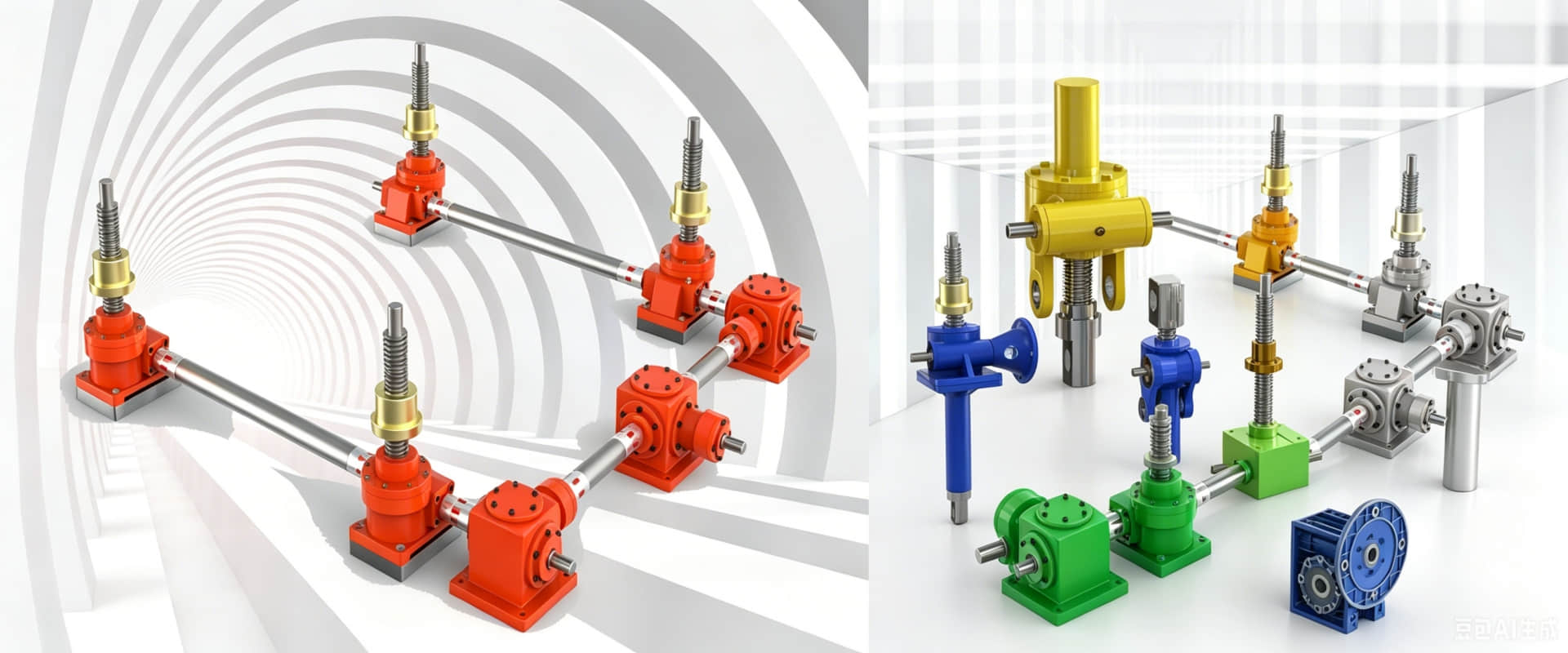
Selection guide for rack and pinion motors: lifting, translation, and braking types
H1:Selection guide for rack and pinion motors: lifting, translation, and braking types
There are three main configurations of linear gear motors to meet different mechanical requirements: lift, translation, and lift with brake.
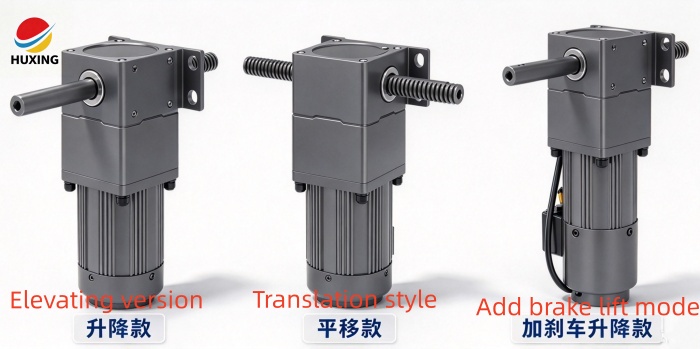
H2. Lifting Type (升降款) — Vertical Motion
The lifting type is designed for vertical, up-and-down movement. The pinion gear is mounted on the output shaft, which directly engages a vertical rack.
Key Features:
Vertical mounting orientation
High thrust capacity for lifting loads
Often paired with a brake for safety (see Type 3)
Can be equipped with limit switches for top/bottom positioning
Best For: Stage lifts, vertical conveyor gates, scissor lifts, and automated storage retrieval systems
H2. Translating Type (平移款) — Horizontal Motion
The translating type is designed for horizontal push-pull or sliding movement. The motor and pinion move along a fixed rack, or the rack moves horizontally driven by the fixed motor.
linear gear motor Key Features:
Horizontal mounting orientation
Dual-sided or extended rack options
Smooth, stable horizontal movement
Ideal for continuous sliding operations
Best For: Automatic sliding doors, horizontal transfer units, telescopic forks, and industrial sliding gates.
H2. Lifting Type with Brake (加刹车升降款) — Vertical Motion with Safety Lock
This is a safety-critical variation of the lifting type. It integrates an electromagnetic brake (visible on the side of the motor in the image) into the gear motor assembly.
translating gear motor Key Features:
Electromagnetic spring-applied, power-off release brake
Prevents load from dropping when power is cut
Holds position accurately under heavy vertical loads
Essential for overhead lifting or personnel-adjacent applications
Best For: Overhead lifting platforms, medical patient lifts, vertically rising stage equipment, and any vertical application where gravity could cause dangerous load slipping.
Technical Specifications (Typical Range)
While exact specs depend on the motor frame size and gearbox configuration, here are the typical parameters for rack and pinion gear motor series:
| Parameter | Value (Typical) |
|---|---|
| Motor Power | 25W – 400W (up to 1.5kW available) |
| Voltage | 1PH 110V/220V, 3PH 220V/380V |
| Gear Ratio | 3:1 to 200:1 (customizable) |
| Rack Module | M1, M1.5, M2, M2.5, M3 |
| Pinion Material | Hardened alloy steel |
| Output Speed | Adjustable via speed controller (for R models) |
| Protection Class | IP54 (standard) |
| Insulation Class | Class F |
| Duty Cycle | Continuous |
| Brake Torque | Matched to motor torque (for brake models) |
Need Help Selecting the Right Rack and Pinion Gear Motor?
Whether you are designing a vertical lift, an automated sliding gate, or a heavy-duty industrial pusher, our engineering team can help you calculate the required thrust, select the right gear ratio, and configure the brake system.