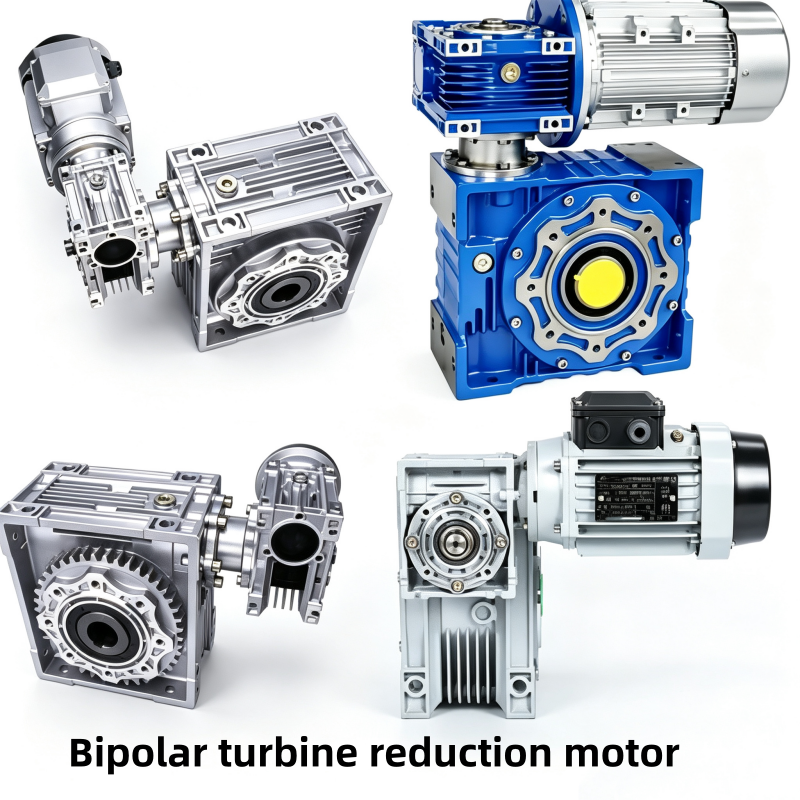
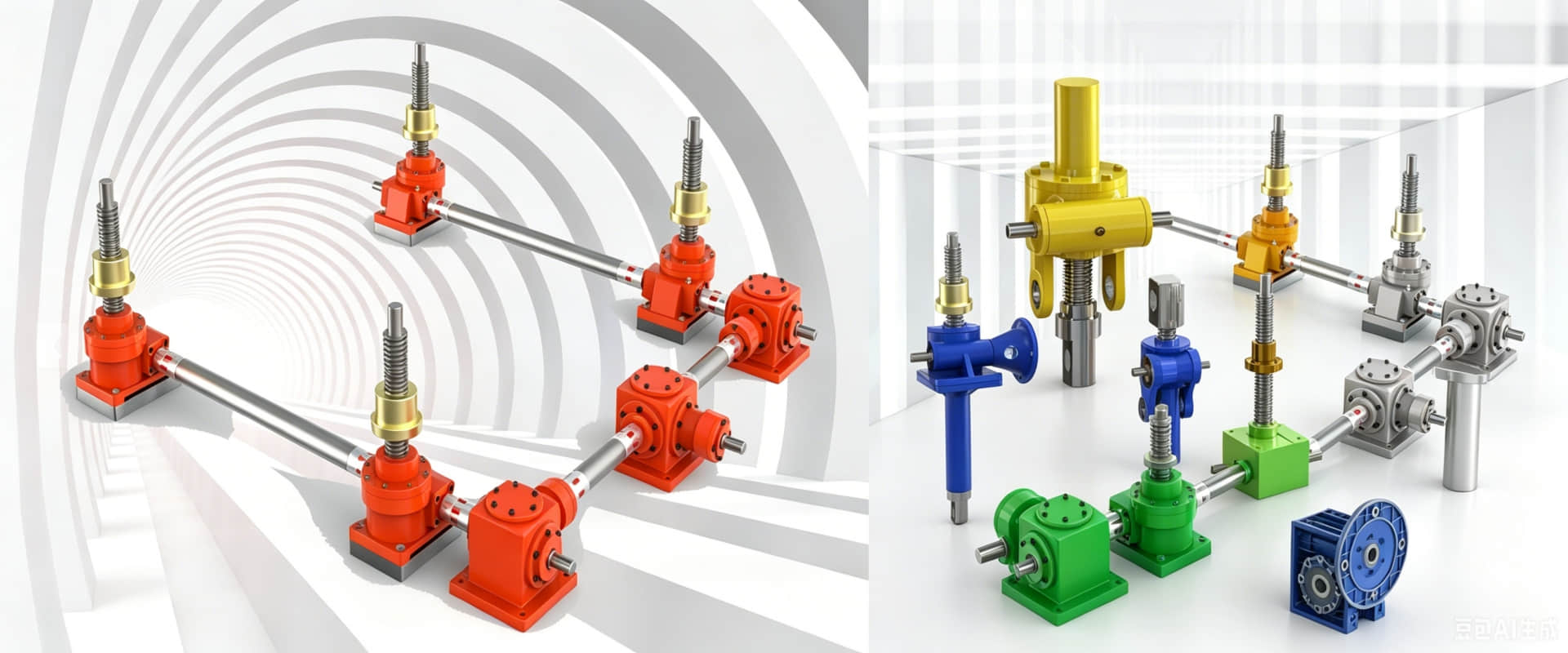
How to select and match NMRV two-stage reducer with motor
Four step method for motor selection
Step 1: Clarify the load requirements
●This is the starting point for all calculations. You need to specify the required output torque (T ₂) and
output speed (n ₂) for your device.
●Torque (T ₂): The force required to drive a load, measured in N · m. For example, calculating the torque
required for a conveyor belt.
●Speed (n ₂): The final required operating speed of the equipment, measured in rpm.
Step 2: Calculate and determine the reduction ratio
●The reduction ratio (i) is the bridge connecting the motor and the output speed of the load.
Calculation formula: i=n ₁/n ₂. N ₁ is the input speed of the motor, and n ₂ is the required output speed.
●Determine motor speed: The commonly used 4-pole motor speed is approximately 1400-1450 rpm.
●Select standard speed ratio: After calculating the theoretical speed ratio, the closest value should be selected from the standard series of NMRV two-stage reducers, such as 300, 400, 500, etc.
Step 3: Calculate the required motor power
The motor power must be sufficient to overcome the energy loss during the load and transmission process.
Estimation formula: P_motor ≥ (T ₂× n ₂)/(9550 × η).
Parameter description:
P_motor: required motor power (kW).
T ₂: Load torque (N · m).
N ₂: Output speed (rpm).
η: Efficiency of gearbox. The efficiency of NMRV two-stage reducers is lower than that of single-stage reducers (usually 60% -90%), and specific values need to be confirmed with the supplier when selecting.
Consider safety factor: To cope with start-up shock and overload, it is recommended to multiply the calculation result by the safety factor (usually 1.2-1.5)
Step 4: Select the reducer model based on torque and speed ratio
The model of NMRV (such as 030, 040) determines the maximum torque it can withstand.
Core principle: The selected NMRV gearbox model must have a rated output torque greater than the calculated load torque (T ₂).