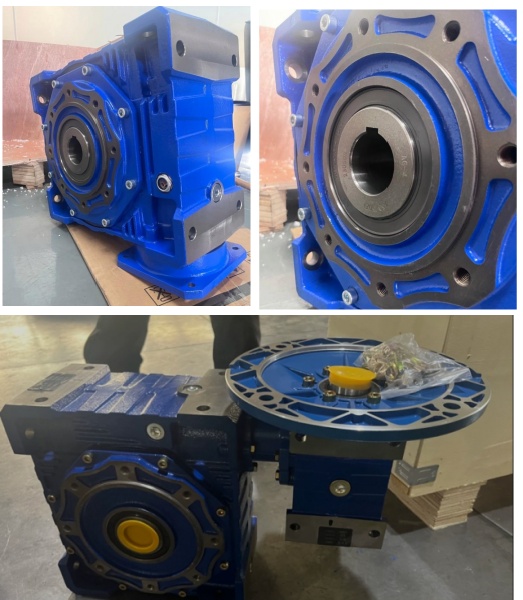
Cast Iron NMRV Gearbox Selection Guide – How to Choose the Right Heavy Duty Model
H1: Cast Iron NMRV Gearbox – 4-Step Selection Guide
Step 1 – Determine your ratio
Ratio = Motor RPM ÷ Desired Output RPM
Example: 1,400 RPM motor, need 20 RPM output → 1,400 ÷ 20 = 70:1-
Step 2 – Calculate required torque
Output Torque (Nm) = Motor Torque × Ratio × Efficiency
Always apply service factor for shock loads – heavy duty applications require higher SF
Step 3 – Match to frame size
| Required Torque | Recommended Model |
| Up to 1,050 N·m | NMRV110 |
| Up to 1,550 N·m | NMRV130 |
| Up to 2,700 N·m | NMRV150 |
Step 4 – Confirm configuration
Input: Hollow bore with B5 flange (standard) or shaft input (NRV)
Output: Solid shaft, hollow shaft, or flange
Mounting: Foot, flange, or torque arm
FAQ
Q: What happens if I choose the wrong frame size?
A: Undersizing leads to overheating, premature wear, and failure. Always select based on required torque + service factor, not motor power alone.
Q: How do I know if I need cast iron or aluminum?
A: Cast iron for NMRV110-150. If your torque requirement exceeds 1,000 N·m or your application has shock/vibration, cast iron is mandatory