Key parameters for selecting industrial gear lifts/jacks
The core selection points of gear lift/screw jack lifting system help you accurately match equipment requirements.
1、 Clarify core parameters: the golden ratio of load to speed
1. Load capacity is the primary consideration
The total load (including the weight of the workpiece, platform, and additional load) needs to be
calculated based on the actual working conditions. Usually, the rated load is chosen to be 1.5 times or
more the actual load to avoid long-term overload operation. For example, if the equipment needs to lift
a 100kg weight, it is recommended to choose a lift with a rated load of 150kg or more.
2. The lifting speed determines efficiency
There are significant differences in speed requirements in different scenarios: precision instrument
transmission requires slow speed (0.1-0.5m/min), while warehousing and logistics require fast
speed (0.5-1.5m/min). Too fast speed can easily generate inertial impact, while too slow speed can
reduce production efficiency. It is necessary to comprehensively evaluate the motor power and
transmission ratio.
2、 Transmission mode and structural adaptation: key to scene orientation
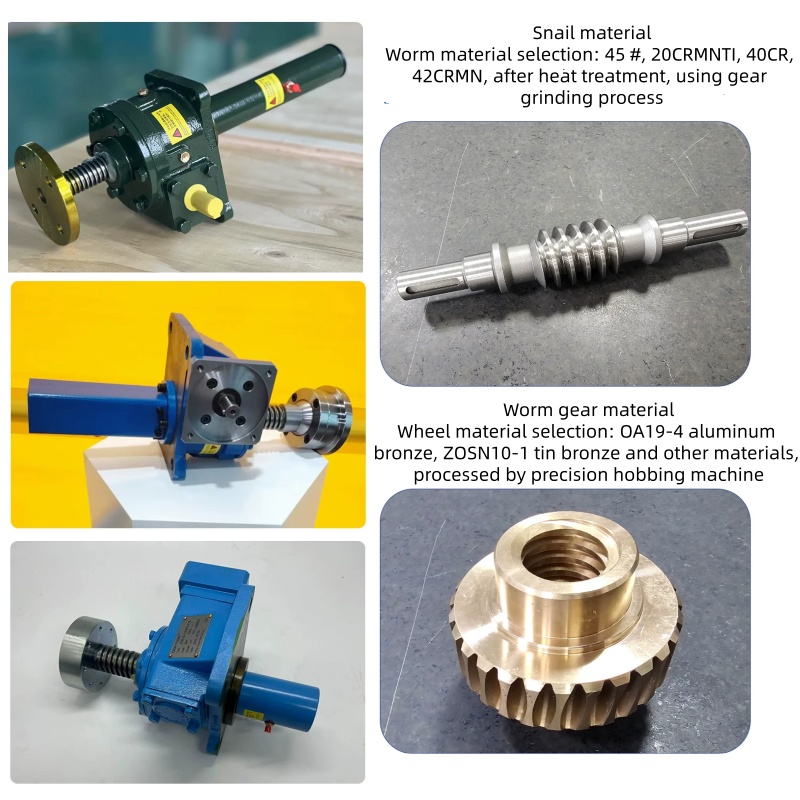
1. Worm drive vs gear drive
-Worm drive: Strong self-locking (such as elevators, lifting platforms), but low efficiency (60% -85%),
suitable for vertical lifting and maintaining position scenarios
-Gear transmission: high efficiency (90% -98%), wide speed range, commonly used in machine tool
accessories, automated assembly lines and other equipment that require frequent start stop
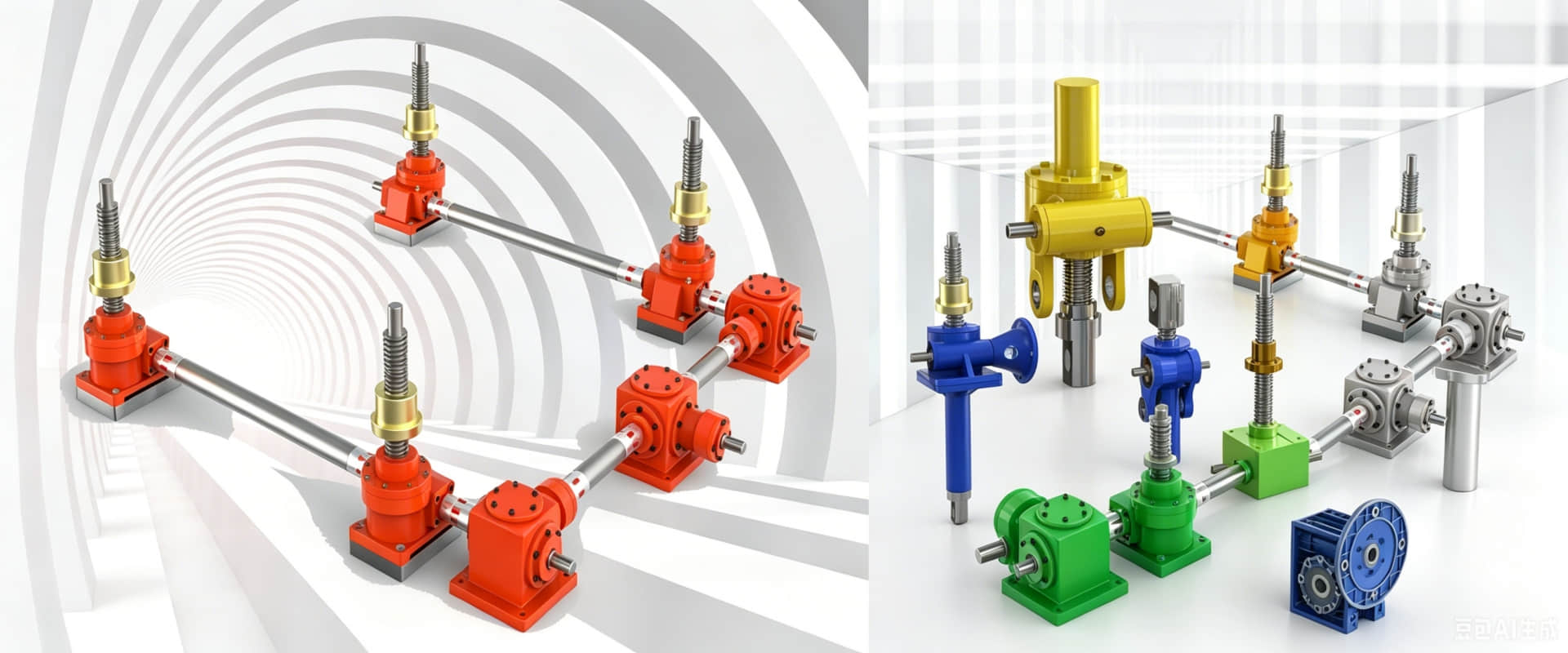
2. Installation form and spatial layout
-Direct connection type: compact structure, suitable for small equipment (such as laboratory lifting
platform)
-Flange type: easy to connect directly with the motor, with small installation errors, recommended for
standard operating conditions
-Side shaking: manual operation scenarios (such as warehouse cargo elevators, medical lift beds)