harmonic reducer vs RV reducer trends
Harmonic Gear Reducers vs. RV Gear Reducers: Trends and Competition in 2027
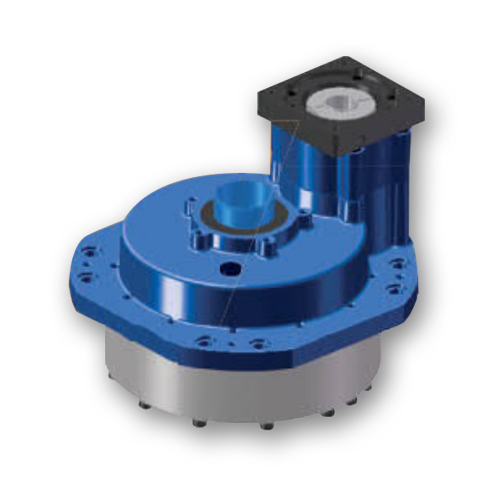
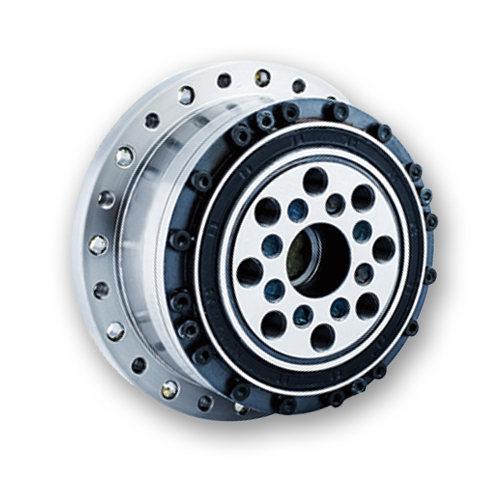
Harmonic gear reducers and RV gear reducers are two core precision transmission
solutions for robot joints. The former achieves zero backlash through the elastic
deformation of the flexspline, while the latter achieves ultra-high rigidity and
impact resistance through a cycloidal pinwheel + planetary structure.
As humanoid robots and collaborative robots move towards mass production,
their technological routes, market share, and industry landscape are undergoing profound reshaping.
**Trend 1: Harmonic Gear Reducers Achieve Breakthroughs in High Rigidity and Long Lifespan
** Traditional harmonic gear reducers have a weakness in flexspline fatigue life.
New generation tooth designs
(double circular arc, S-shaped tooth profile), special alloy steel, and surface treatment technologies
have increased rated lifespan to over 15,000 hours. Simultaneously, by optimizing the wave generator
bearings and cylinder structure, rigidity is increased by 30-50%, enabling them to bear heavier workloads
and beginning to penetrate medium-sized joints originally belonging to RV gear reducers.
**Trend 2: RV Gear Reducers Evolve Towards Lightweighting and Low Cost** While RV gear reducers offer
superior rigidity, they are relatively large and heavy. The trend for 2027 is to reduce weight by 20-30%
through small-module cycloidal gears, integrated planetary carriers, and aluminum housings. Simultaneously,
breakthroughs in domestic manufacturing processes (precision gear grinding, automated assembly lines)
will reduce costs to 40-50% of imports, accelerating their adoption in humanoid robot hip joints
and high-torque collaborative arms.
**Trend Three: The Boundary Between Harmonic and RV Gear Reducers is Blurring** Hollow harmonic reducers
have achieved inner diameters of over 50mm to meet wiring requirements; compact RV reducers with outer
diameters under 60mm are now available. In the 15-30Nm torque range, the two are beginning to
compete directly, with customers weighing factors such as inertia, lifespan, and cost.
**Trend Four: Integration of Integrated Joint Drive Solutions** In integrated modules of motor + reducer + encoder + driver,
harmonic reducers, due to their flat structure, are superior, especially suitable for service robots and dexterous hands;
RV reducers are used for leg and lumbar joints requiring impact resistance. Manufacturers are no longer simply selling
reducers, but rather providing complete solutions such as "harmonic modules" or "RV modules."
**Trend 5: Domestic Market Share Continues to Expand** While Japanese companies Harmonic Drive Systems
(Harmonic) and Nabtesco (RV) still dominate the high-end market, Chinese companies such as Green Harmonic Drive Systems,
Laifu Harmonic Drive Systems, Shuanghuan Transmission, and Qinchuan Machine Tool have entered the supply chains of leading
robot manufacturers. By 2027, the market share of Chinese brands in the global humanoid robot reducer market is expected to exceed 35%.
**Selection and Supply Recommendations** Harmonic drives are suitable for lightweight, high-precision, low-to-medium torque joints;
RV reducers are suitable for heavy-duty, high-impact, high-rigidity joints. In actual models, both are often mixed
to balance cost and performance.
**We Offer a Full Range of Harmonic and RV Reducers** Whether you need lightweight harmonic modules or high-rigidity
RV reducers, we can customize integration solutions based on your joint torque, space, and precision requirements.
Provide your robot joint parameters to our engineers to obtain a technical selection report and prototype delivery plan.