Gearbox for conveyor systems_dedicated reducer for conveyors
I. What is a Conveyor?
A conveyor is the most basic continuous material handling equipment in industrial automation.
It is mainly used for feeding materials on assembly lines, transferring goods, warehousing
and sorting, and conveying bulk materials. It enables uninterrupted, uniform,
and stable material transport, replacing manual handling and significantly improving
the operating efficiency of automated production lines. It is widely used in packaging,
logistics, food, chemical, mining, and intelligent manufacturing industries.
II. Common Types and Characteristics of Industrial Conveyors
1. Belt Conveyor (Most Common): Quiet operation, smooth conveying, suitable for bulk
and boxed materials, supports horizontal and small-angle inclined conveying, suitable
for light and medium-sized assembly lines, and has the widest range of applications.
2. Roller Conveyor: Modular structure, controllable accumulation, uniform load distribution,
suitable for conveying and sorting full-case goods, enabling material buffering
and orderly flow, and suitable for automated warehouse scenarios.
3. Chain Conveyor: Heavy-duty, durable, impact-resistant, and with high tensile strength,
suitable for heavy workpieces, high temperatures, and harsh working conditions,
mostly used in heavy industry and tooling conveying scenarios.
4. Screw Conveyor: Enclosed conveying system, no material spillage, suitable for conveying powders,
granules, and slurries. Excellent dustproof and sealing performance,
widely used in the chemical, food, and building materials industries.
III. Mainstream Gearbox Types for Conveyors Conveying systems primarily operate under continuous,
low-speed, high-torque, and fatigue-resistant conditions. Therefore, high-stability, low-failure-rate
dedicated gearboxes are preferred. The mainstream compatible models are as follows:
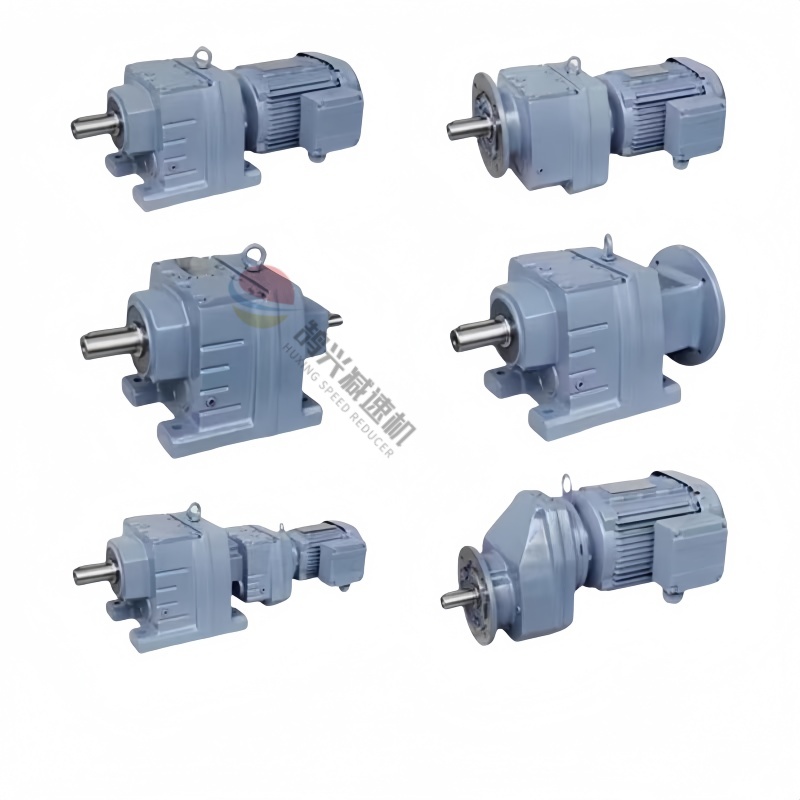
1. Helical Gear Reducer (GR Series): First choice for assembly lines and belt conveyors.
Quiet operation, high transmission efficiency, suitable for long-term continuous operation.
2. Helical Bevel Gear Reducer (GK Series): Right-angle output, saves installation space, suitable
for conveying equipment with limited space on the sides or bottom.
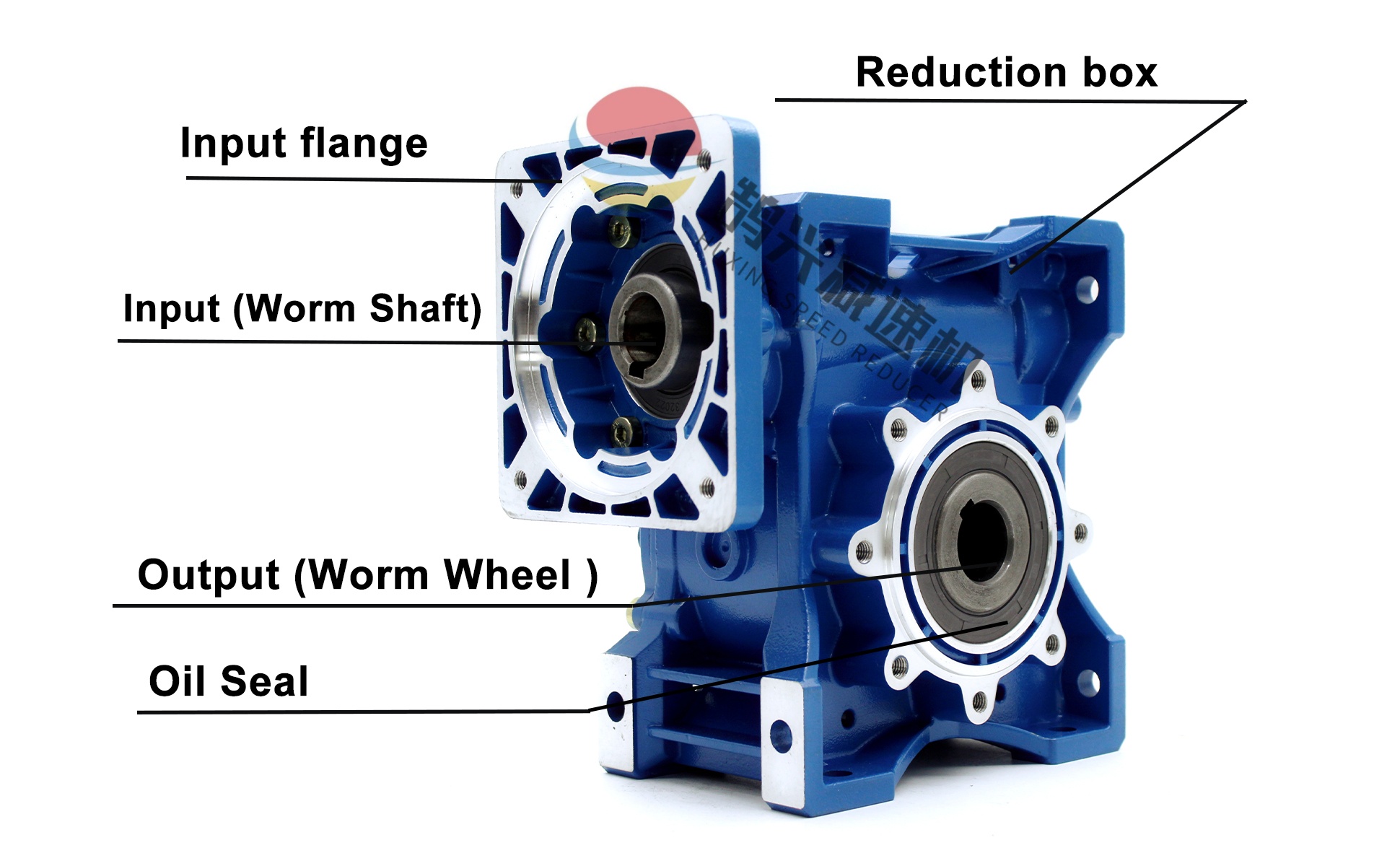
3. Worm Gear Reducer (NMRV): High cost-effectiveness, strong self-locking,
suitable for light conveyors and small inclined belt conveyors, preventing material slippage.
4. Planetary Gear Reducer: High precision, low backlash, suitable for precision conveying and
sorting equipment requiring precise start/stop and positioning.
IV. Core Technical Requirements for Conveying System Gearboxes
1. Continuous Fatigue Resistance: Supports 24/7 continuous operation, resists start-stop impacts,
and eliminates jamming and speed drop issues under long-term load.
2. High Torque, Low Speed: Stable torque output at low speeds ensures smooth start-up
and prevents material slippage, deviation, and accumulation.
3. High Protection Rating: Standard IP65, optional IP67, dustproof and waterproof, suitable for dusty,
washing, and humid workshop conditions.
4. Low Noise, Low Vibration: Precision-ground gears ensure smooth meshing, meeting the quiet production
standards of cleanrooms and food processing plants.
5. Maintenance-Free, Long Lifespan: Lifetime lubrication design reduces downtime maintenance
frequency and is suitable for the high-cycle production needs of automated production lines.
V. Common Problems and Pain Points of Conveyor Reducers
1. Start-up Slippage and Insufficient Power: Often caused by a small reduction ratio and insufficient torque
reserve, leading to situations where materials cannot be moved under heavy loads during start-stop operations.
2. High noise and vibration: Insufficient gear precision and excessive assembly clearance
lead to accelerated wear and increased abnormal noise during long-term operation.
3. Oil leakage, dust and water ingress: Insufficient sealing level; workshop washing
and dusty environments cause oil seal aging and damage to the gearbox due to contamination.
4. High temperature and frequent overload: Mismatched power selection
and poor heat dissipation can easily burn out the motor and wear down gears during prolonged continuous operation.
5. Material slippage and backflow: Lack of self-locking performance in incline conveyors;
failure to select worm gears or braked reducers.
VI. Excellent Implementation Cases of Conveyor System Gearboxes Our dedicated conveyor reducers
have been mass-produced and installed in production lines across various scenarios including logistics,
food, chemical, heavy industry, and smart warehousing. They are mature in adaptability to
different operating conditions and provide stable operating data. The following are typical implementation cases:
Case 1: Intelligent Logistics Sorting Line (RV Worm Gear + Planetary Reducer) | Suitable for high-frequency
start/stop and high-speed sorting conditions. Precise positioning without jamming, self-locking to prevent
material slippage, supports 24-hour continuous operation, significantly reducing equipment failure rate
and maintenance costs, suitable for automated sorting and conveying lines in express delivery and e-commerce.
Case 2: Food Packaging Belt Conveyor Line (R-series helical gear reducer) | Suitable for dust-free and
water-washing cleanroom environments. IP65 sealed protection, low-noise precision transmission,
lifetime maintenance-free lubrication, can operate continuously and stably for a long time,
perfectly suited for cleanroom conveyor lines in food and pharmaceutical industries.
Case 3: Chemical Powder Screw Conveyor Line (Dedicated Helical Gear Reducer)
Suitable for dusty and humid harsh environments. Transmission efficiency up to 96%,
dustproof and intrusion-proof, wear-resistant, can stably convey powder and granular materials,
effectively eliminate jamming failures, long-term stable operation, energy saving and low consumption.
Case 4: Heavy-duty Industrial and Mining Belt Conveyor Equipment (High-power Helical Gear Reducer) |
Suitable for heavy-duty conveying scenarios in mining and building materials industries.
With ample torque reserve, impact resistance, and fatigue resistance,
it can operate at full load for extended periods, resolving issues such as heavy-load slippage,
high-temperature overload, abnormal noise, and wear, ensuring stable operation of heavy-duty production lines.
Case 5: Intelligent Warehouse Roller Conveyor Line (K-series Right Angle Gear Reducer)
Suitable for confined installation spaces. The 90° right-angle output saves equipment space,
ensuring smooth start-up and shutdown, and uniform conveying. It is suitable for dense roller conveyors
and material buffering, and is widely used in automated three-dimensional warehousing equipment.
VII. Summary Different types of conveyors require dedicated conveyor system gearboxes.
Proper selection can completely solve common problems such as unstable conveying, abnormal noise and oil leakage,
overload shutdown, and material slippage. Our factory's full range of conveyor-specific reducers is suitable for all scenarios,
from light to heavy loads, and supports customization of voltage, speed ratio, and installation method.
It is the core power component for the stable operation of industrial conveyor lines.