
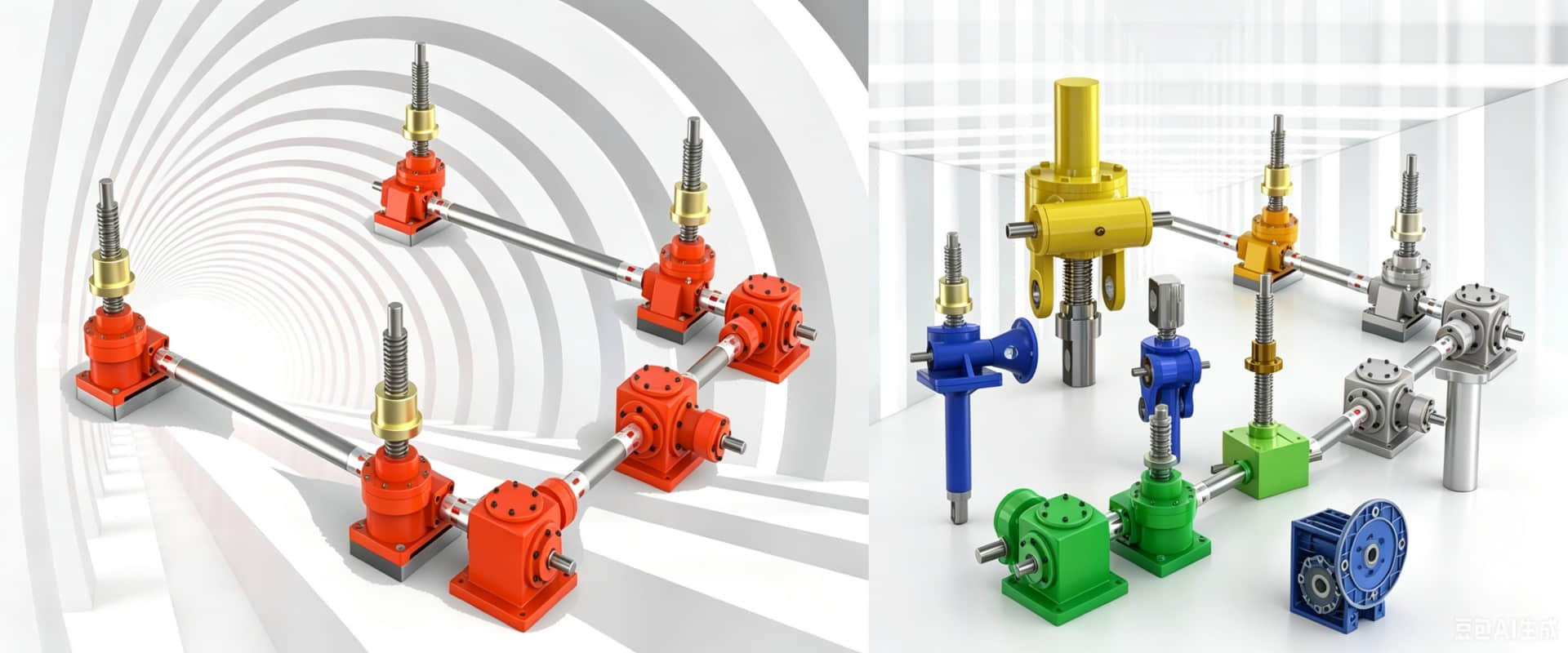
How to calculate torque and transmission ratio when purchasing a gear reducer for the first time?
Guidelines for torque calculation and transmission ratio selection of helical gear reduction motors:
Calculation of speed ratio for horizontal helical gear reducer:
1.Gear Ratio = Motor Speed (RPM) ÷ Output Speed (RPM)
Example: Your motor spins at 1400 RPM. Your machine only needs 70 RPM.
Calculation: 1400 ÷ 70 = 20.
Result: You need a 20:1 ratio gearbox.
2. Torque: How Strong Do You Need It?
Torque is the twisting force. When a gearbox reduces speed, it multiplies torque.
The Simple Formula:
Output Torque (N·m) = 9550 × Motor Power (kW) ÷ Output Speed (RPM)
Example: You have a 1.5 kW motor and your output speed is 70 RPM.
Calculation: 9550 × 1.5 ÷ 70 = 204.6 N·m.
Result: Your motor provides about 205 N·m of twisting force.
3. The Golden Rule: Add a Safety Margin (Service Factor)
Never push a gearbox to 100% of its limit. If your machine jams or vibrates, the gearbox will break. You must add a safety margin.
Required Gearbox Torque = Calculated Torque × Service Factor
Service Factor Guide:
Smooth machines (fans, light conveyors): Use 1.0
Normal machines (mixers, packaging): Use 1.5
Rough machines (crushers, hoists): Use 2.0
Example: 205 N·m × 1.5 = 307.5 N·m.
Result: When buying, choose a gearbox rated for at least 308 N·m.
Speed ratio lookup table for helical gear reducer:
| What You Want to Know | Easy Formula | Example Result |
|---|---|---|
| Gear Ratio | Motor RPM ÷ Output RPM | 1400 ÷ 70 = 20 |
| Output Torque | 9550 × Motor kW ÷ Output RPM | 9550 × 1.5 ÷ 70 = 205 N·m |
| Safe Torque to Buy | Output Torque × Service Factor | 205 × 1.5 = 307.5 N·m |
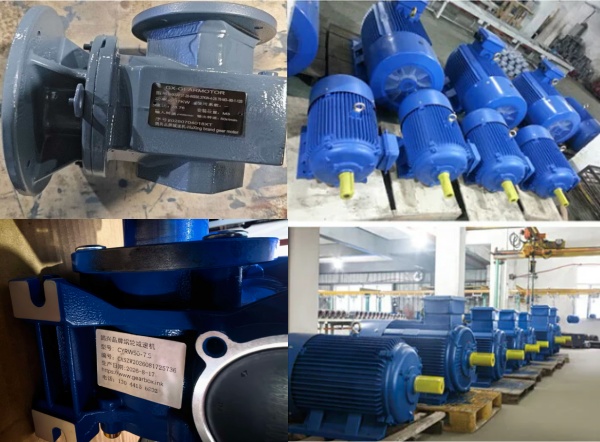
4.high efficiency helical gear reducer Easy FAQ
Q: What happens if I pick a gearbox with too little torque?
A: The gears will break or the motor will burn out. Always use the Service Factor to buy a slightly stronger gearbox.
Q: Can I just buy a very strong gearbox?
A: Yes, but it will be bigger, heavier, and more expensive. It's best to calculate your exact needs and add the safety margin.
Q: Does a higher gear ratio always give me more torque?
A: Yes, lower speed equals higher torque. But if the ratio is too high, the gearbox may overheat. Stick to the manufacturer's recommended range.
Q: Why do I need the "9550" number in the formula?
A: It is just a standard math number used to convert electrical power (kW) and speed (RPM) into twisting force (N·m). Just put your numbers into the formula and calculate!
Q: How do I know the Output RPM of my machine?
A: You can measure it with a tachometer (a cheap tool that measures spinning speed). Or, check your machine's manual. If you can't find it, contact the machine manufacturer.
Send us your requirement: Power, Ratio, Torque, Working Condition or Drawing
We will provide professional quotation & selection plan.
Contact:Daniel
Whats APP: +9779701527339
Email: [email protected]
Tel: +86-13044156902