
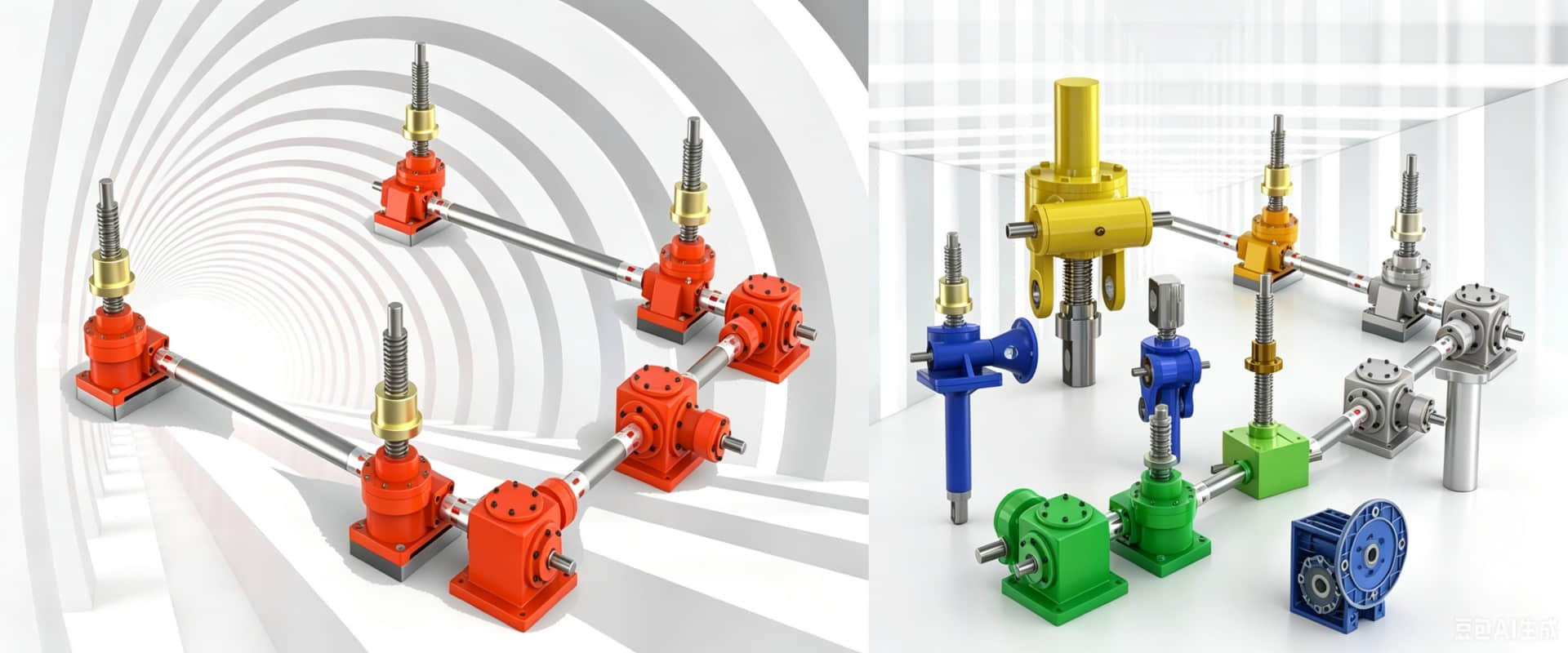
How to Improve Helical Worm Gear Reducer Efficiency: 4 Practical Levers
Cutting Sliding Losses in Helical Worm Gearboxes: Selection, Lubrication, Build ,Operation
Helical worm reducers are inherently less efficient than pure helical or planetary units because the worm mesh runs on sliding friction. Efficiency gains come from four levers, in order of impact.
1. Transmission Gear Reducer Selection Stage (Do This First)
| Lever | Action | Why It Matters |
|---|---|---|
| Lower ratio | Prefer ratios under 10; avoid >40 | Sliding loss rises sharply with ratio |
| Correct power match | Avoid long-term light load or overload | Light load prevents proper oil film; overload adds heat and wear |
| Materials | Tin bronze worm wheel (ZCuSn10Pb1); 40Cr or 20CrMnTi carburized/quenched worm | Lower friction coefficient, better wear resistance |
| Thermal rating | Check heat power, not just mechanical power | High ambient temperature directly cuts efficiency; upsize the frame if needed |
Oil type: use dedicated worm gear oil—synthetic EP or synthetic worm oil. Do not use standard mineral gear oil; viscosity collapses at high temperature and the film breaks.
Viscosity: 460# for normal ambient, 680# synthetic for high temperature, 320# for low temperature.
Oil level: follow the sight glass exactly. Overfilling raises churning loss and oil temperature; underfilling raises friction.
Oil change: first change at 300 h, then every 2,000–3,000 h. Oxidized or contaminated oil sharply increases friction.
3. Machining & Assembly (Factory Side)
Ensure correct mesh backlash and a centered contact pattern—off-center contact causes localized friction. Use low-friction roller bearings with correct preload, add cooling fins, a fan, or an external cooling coil, and specify low-friction seals to cut seal drag and prevent oil loss.
4. Operation & Duty Control
Shield the reducer from radiant heat near kilns and drying lines; efficiency drops noticeably above 40°C ambient. Reduce frequent starts and shock loads, which break the oil film. Inspect periodically for worm wheel wear, bearing clearance, and oil contamination—worn tooth surfaces raise sliding loss over time.