Final guide for selection and calculation of transmission ratios for F-series helical gearboxes
H1: The Ultimate Guide to F Series Parallel Shaft Gearbox Ratio Selection and Calculation
H2: Understanding F Series Parallel Shaft Gearbox Ratios
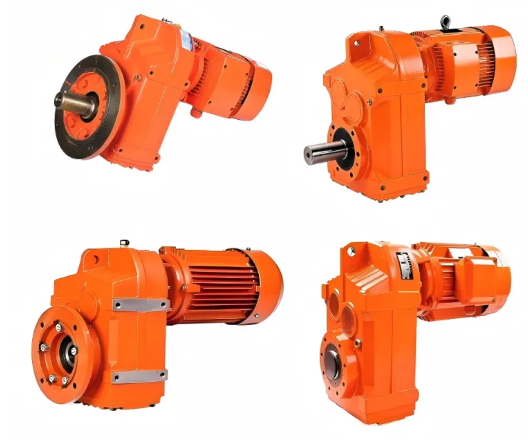
The F series parallel shaft helical gearbox is designed with input and output shafts in parallel, offering a compact solution for space-limited applications. The gear ratio defines the relationship between motor input speed and gearbox output speed, directly impacting torque output and equipment performance
H2: F Series Gearbox Ratio Range and Specifications
F series gearboxes cover an extensive ratio range
| Configuration | Ratio Range |
|---|---|
| Basic F Series | 3.77 – 281.71 |
| F/R Combined | Up to 31,434 |
Key specifications
Power range: 0.12 – 200 kW
Output torque: 200 – 18,000 Nm
Efficiency: 96% (two-stage) / 94% (three-stage)
Frame sizes: F27, F37, F47, F57, F67, F77, F87, F97, F107, F127, F157
H2: How to Calculate Gear Ratio for F Series Gearbox
Basic Formula:
Ratio (i) = Motor Input Speed ÷ Desired Output Speed
Example: A 4-pole motor at 1450 r/min driving a conveyor requiring 30 r/min:
i = 1450 ÷ 30 = 48.3:1 (select nearest standard ratio)
Torque Verification:
Output Torque = 9550 × Power × Ratio × Efficiency ÷ Input Speed
Always select a ratio that keeps the parallel shaft gearbox operating within its rated torque capacity
H2: Applications and Selection Tips
F series gearboxes are widely used in:
Conveyor systems and chain conveyors
Mixers and agitators
Packaging machinery
Extruders and screw conveyors
Overhead cranes and hoists
H2: Get Expert Help with Your F Series Gearbox Selection
Choosing the correct F series gearbox ratio ensures optimal equipment performance and service life. Contact us with your motor specifications and application requirements – we will provide a tailored gear reduction calculation within 24 hours.