how to fix gearbox oil leakage
**Gearbox Oil Leak Repair Guide: Engineering Steps from Leak Detection to Complete Fix**
Gearbox oil leaks are a common problem in the industry. It's not just a matter of dirt;
it signifies lubrication loss and contaminant intrusion. Ignoring it will quickly lead to wear,
overheating, and even complete machine failure.
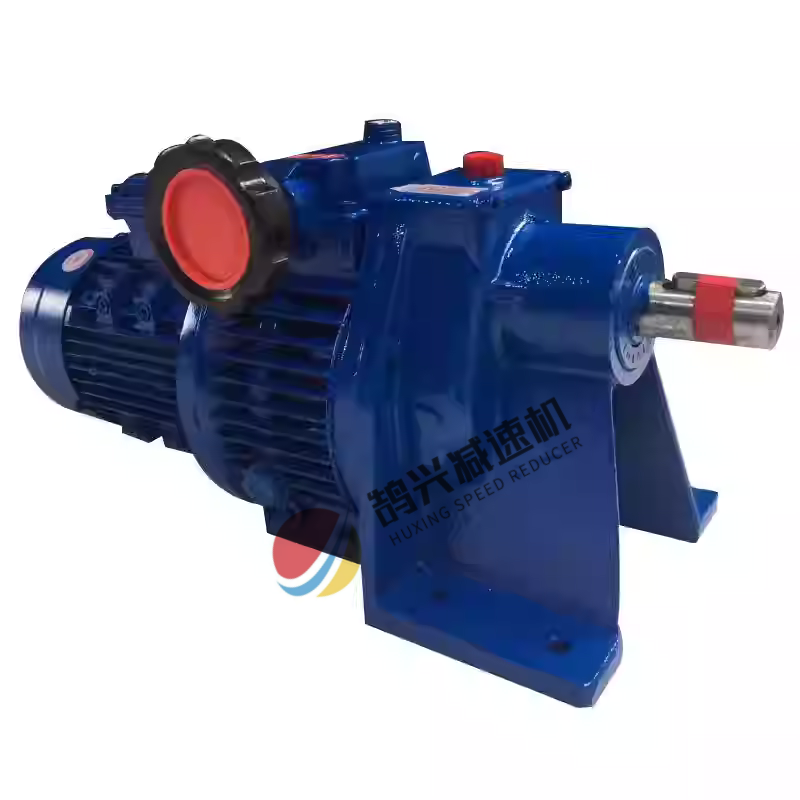
Huxing has exclusive technical expertise in gearbox oil leaks,
providing users with leak-free gearboxes.
Below is a complete fix procedure organized in order of on-site operability.
I. Precisely Locate the Leak Point: Thoroughly clean the outer surface of
the gearbox with a cleaning agent. After drying, sprinkle talcum powder or spray developer
on the suspected area. Short-term operation will clearly show the source
of the leak—whether it's the shaft seal, the housing mating surface, the breather, or the end cover.
II. Replace the Failed Shaft Seal:
When the leak is on the input/output shaft:
- Drain the oil below the oil seal position.
- Use a special puller to remove the old oil seal, being careful not to scratch
the shaft surface or the seat hole.
- Inspect the journal. If a deep groove is ground out, it must be repaired with a **shaft sleeve**
or repaired by welding and grinding before installing a new oil seal.
- Clean the lip of the new oil seal of gear oil. Push it into place using a pressure sleeve;
direct hammering is strictly prohibited.
III. Clean or Replace the Breather
A clogged breather is a frequently overlooked culprit for oil leaks—increased internal pressure forces
oil out of the seal. Unscrew the breather plug and thoroughly blow out any blockages with solvent and
compressed air. If it is a spring-loaded type and stuck, replace it directly. In dusty environments,
this simple action can solve numerous recurring oil leaks.
IV. Adjust Oil Level
Add or drain oil to the middle of the sight glass. Excessive oil can cause violent oil churning, overheating,
and oil spraying. Always check the oil level when the machine is stopped and at room temperature.
V. Reseal the Mold and End Cover
When there is oil leakage from the mold or end flange:
- Drain the oil completely, remove the cover, and carefully scrape off any old sealant and gasket residue
without damaging the metal substrate.
- Wipe with solvent until completely degreased and dry.
- Apply a continuous, thin layer of anaerobic sealant (such as Loctite 515), specifically for rigid metal flanges.
Do not use ordinary silicone sealant, as it can easily seep into the interior and clog oil passages.
- Immediately close the cap and tighten it diagonally in stages to the specified torque.
VI. Rooting Out Bearing Wear
If the shaft has radial or axial movement, the new oil seal will inevitably leak again within a few weeks. In this case,
the worn bearing must be disassembled and replaced. The underlying cause of recurring oil leaks is often bearing
failure or misalignment; this step should not be skipped.
VII. Oil Change and Flushing
If oil contamination or the wrong grade is suspected, drain the old oil while it is still hot, flush with compatible flushing oil,
and then add new oil of the manufacturer's specified grade and viscosity. Synthetic oil is preferred for high-temperature environments.
**Daily Prevention:** Check the breather and seals quarterly, maintain the correct oil level, and monitor for water and metal particles in the oil.
**We offer leak-proof gearbox solutions and spare parts support.** Our engineers can provide original factory sealing kits, breather upgrades,
and recommendations for specialized lubricants. If oil leakage has damaged the housing or journals,
we can also provide a **direct replacement unit** with perfectly matched installation dimensions.