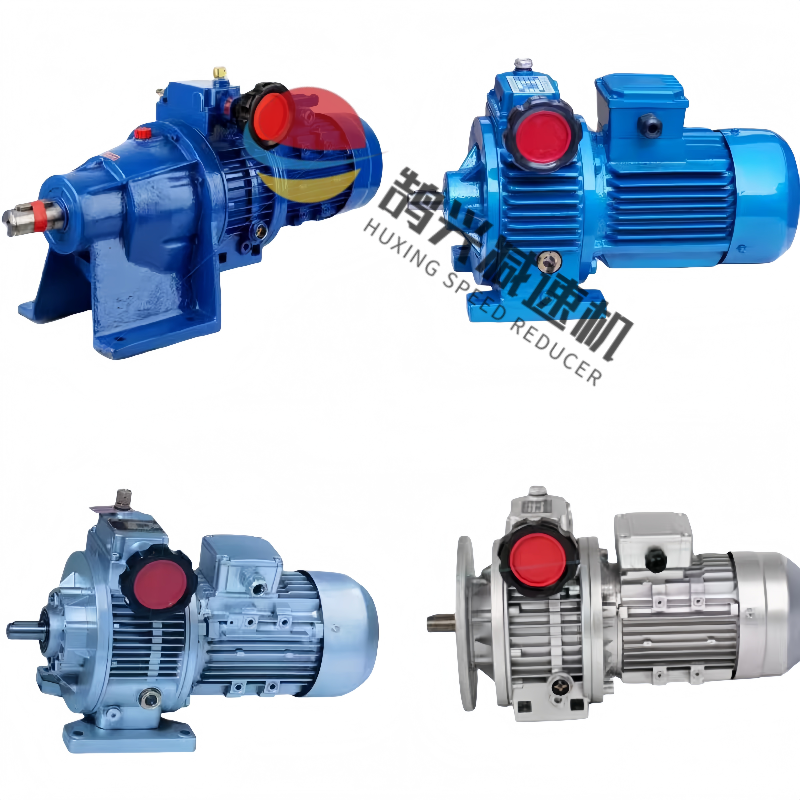
gear motor overheating causes and solutions
Causes and Solutions for Gear Motor Overheating: Quick Diagnosis, Preventing Overheating and Burnout
Overheating of gear motors is one of the most common field failures. For every 10°C increase in temperature,
the insulation life is approximately halved; excessive oil temperature leads to lubrication failure and accelerated
gear wear. Identifying and addressing the heat source promptly is far more cost-effective than replacing
the motor afterward.
I. First, determine the source of the heat
Use a handheld thermometer or infrared thermal imager to measure the following:
- **Motor casing**: Normal temperature rise ≤60~80K (Class B insulation),
abnormal temperatures exceed 90°C.
- **Gearbox oil sump or housing**: The long-term operating temperature of mineral oil
should be 60~80°C; be wary if it exceeds 90°C.
- Determine whether the heat source is on the motor side or the gearbox side, or both,
and address the problem accordingly.
II. Seven Common Causes of Overheating
| No. | Cause | Characteristics and Diagnosis |
| 1 | **Long-term Overload/Insufficient Service Factor** | Current continuously exceeds rated value,
motor overheats, reducer also overheats, vibration may increase.
| 2 | **Voltage Imbalance or Phase Loss** | Three-phase current difference exceeds 5%,
motor temperature rises rapidly, accompanied by humming noise.
| 3 | **Inverter Harmonics or Low-Frequency Operation** | Fan cooling capacity drops sharply at low speeds,
motor becomes stuffy; harmonics increase iron loss.
| 4 | **Poor Lubrication (Oil Quantity/Oil Quality)** | Too much oil causes oil churning and heat generation;
too little oil results in insufficient lubrication; oil deterioration or incorrect viscosity leads to increased friction.
| 5 | **Abnormal Wear of Bearings or Gears** | Stuck rotation, loud noise, localized high temperature,
possibly accompanied by iron filings.
| 6 | **Ventilation Blockage or High Ambient Temperature** | Fan cover or cooling fins are blocked by dust;
multiple devices are close together forming a heat island; ambient temperature >40℃ without derating.
7 | **Frequent Start-Stop or Inching** | High starting current, heat cannot dissipate quickly enough,
motor remains overheated |
III. Solutions for Each Problem
**Corresponding Overload:**
- Measure the actual operating current and calculate the load torque. If it consistently exceeds the rated value,
the geared motor power must be upgraded or the reduction ratio increased.
- The original model's service factor is too small; a larger frame size is required.
**Corresponding Electrical Problems:**
- Measure the three-phase voltage and current; the imbalance should be controlled within 5%.
- Install an output reactor or filter at the inverter output to suppress harmonics.
- For long-term low-frequency operation, use independent fan cooling (IC416) or upgraded forced air cooling.
**Corresponding Lubrication:**
- Strictly follow the oil type and viscosity specifications in the instruction manual; maintain
the oil level at 1/2 to 2/3 of the sight glass.
- Use synthetic oil for high-temperature environments; establish an oil change cycle and check
the oil quality every 3 months.
- Worm gear reducers are prone to overheating due to low efficiency; switch to extreme pressure
synthetic grease or upgrade the oil grade.
**Corresponding to Mechanical Wear:**
- Monitor vibration and noise; use spectrum analysis to determine gear or bearing failure.
- Replace damaged parts, re-align and install to eliminate additional frictional heat.
**Corresponding to Ventilation Environment:**
- Clean the fan cover, cooling fins, and protective mesh weekly to remove dust.
- Ensure at least 15cm of ventilation space around the motor; if the ambient temperature exceeds 40℃,
derating or installing an air duct is necessary.
**Corresponding to Frequent Start-Stops:**
- Increase the service factor; select a Class H insulated motor with a higher heat resistance rating.
- Consider increasing the inertia ratio or installing a soft starter to limit starting current.
IV. Three Preventive Maintenance Tips
1. **Daily Inspection:** Check the temperature of the motor and reducer by touch or with a temperature gun.
2. **Regular Current Measurement:** Immediately investigate load changes if abnormal current increases are detected.
3. **Temperature Imaging Survey:** Conducted quarterly to detect localized hot spots in bearing housings and seals.
V. When Conventional Methods Ineffective
If the temperature remains high despite all measures being implemented, it indicates insufficient original design heat capacity.
A recalculation of the thermal balance is necessary, or a custom-designed geared motor with cooling coils, an external fuel station,
and a larger housing must be installed.
We provide comprehensive overheat diagnosis and cooling solutions.
Send your operating conditions, ambient temperature, measured current, and temperature values to our engineers.
We will generate a thermal balance verification report and recommend a highly reliable cooling solution and a high-efficiency geared motor.
Contact us now to end overheating shutdowns and obtain professional heat dissipation selection and pricing.