
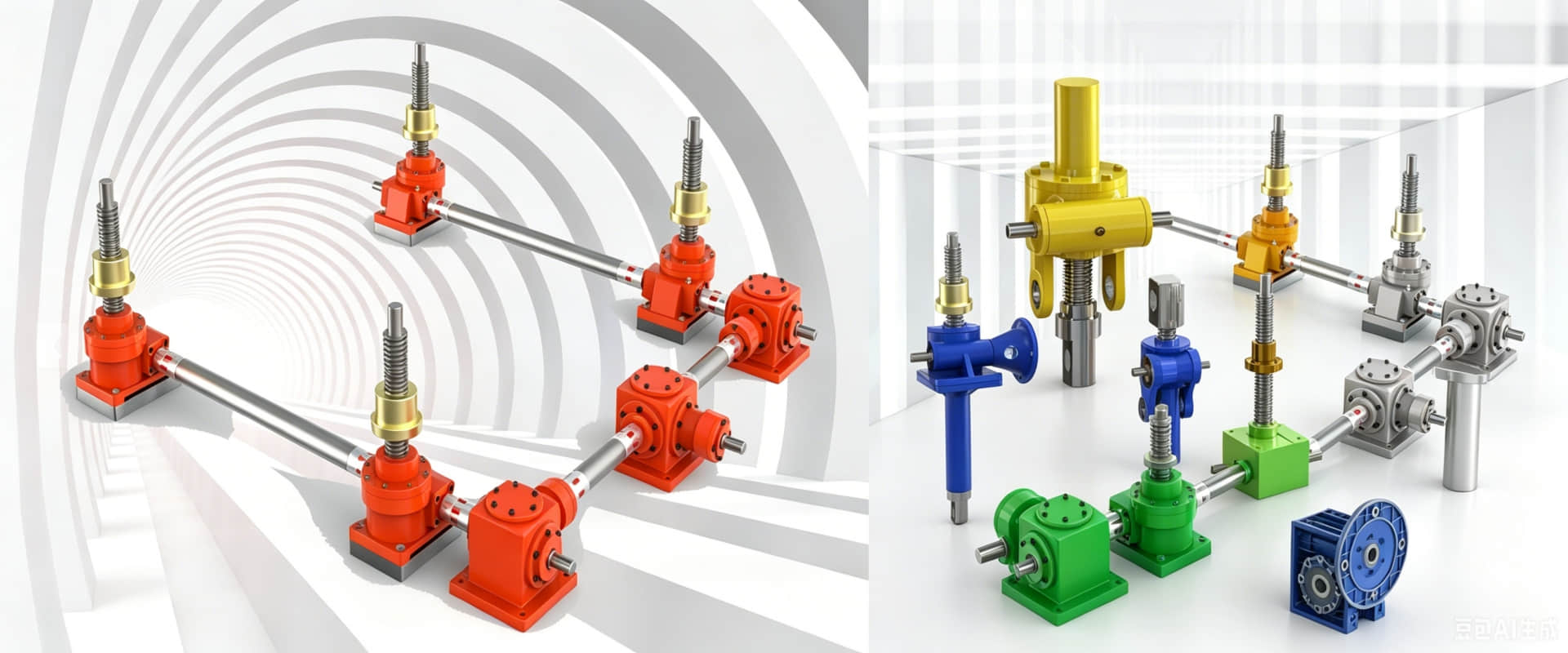
how to install a gear motor? gear motor installation guide
Gear Reducer Motor Installation Guide
Proper installation is crucial for the long-term operation of gear reducers.
The following is the standard installation procedure:
I. Pre-installation Preparation
Before installation, check the nameplate to ensure the power supply voltage and frequency match.
Inspect the motor and reducer for any transportation damage and confirm that the dimensions
of the connection points (locating bosses, shaft diameter, and grooves) match.
The mounting surface must be flat and have sufficient rigidity; installation
on a low-vibration, torsional rigidity support structure is recommended.
II. Mechanical Installation
Place the gear reducer in position and tighten the bolts. Installation direction:
The standard design is for the motor and reducer to be horizontally mounted
with the output shaft horizontal. If vertical or non-standard installation is required
consult the manufacturer beforehand—incorrect installation angles can cause oil leaks in oil-lubricated models.
A key principle: Install the motor as high as possible above the reducer;
this prevents lubricating oil from entering the motor even if the oil seal ages and leaks.
When tightening the bolts, tighten them diagonally to ensure even force distribution.
Bolt strength should ideally be no less than grade 8.8.
III. Alignment (The Most Important Step)
The motor shaft and load shaft must be strictly aligned. The coaxiality error must not exceed the
coupling's compensation amount. Poor alignment will
accelerate bearing and gear wear, and may even lead to shaft breakage.
When installing transmission components such as sprockets and pulleys,
never use a hammer to strike them. Use the threaded holes on the shaft
end and press the transmission components in with bolts.
IV. Electrical Connection and Lubrication
Connect the wires according to the nameplate markings and
confirm the phase sequence is correct. Install the overload protection device,
setting the current to 1.1 to 1.2 times the rated current.
Before operation, ventilation and lubrication must be addressed: remove the
vent plug and replace it with a new one; open the oil level plug to check
the oil level and add oil until it overflows from the oil level hole.
V. Trial Run
Run the equipment under no-load for at least 2 hours, observing
whether the operation is smooth and whether there are any abnormal noises,
vibrations, or oil leaks. Only after confirming that everything is correct can the equipment be operated under load.
Remember: Spending an extra half hour on installation can extend the equipment's lifespan by several years.